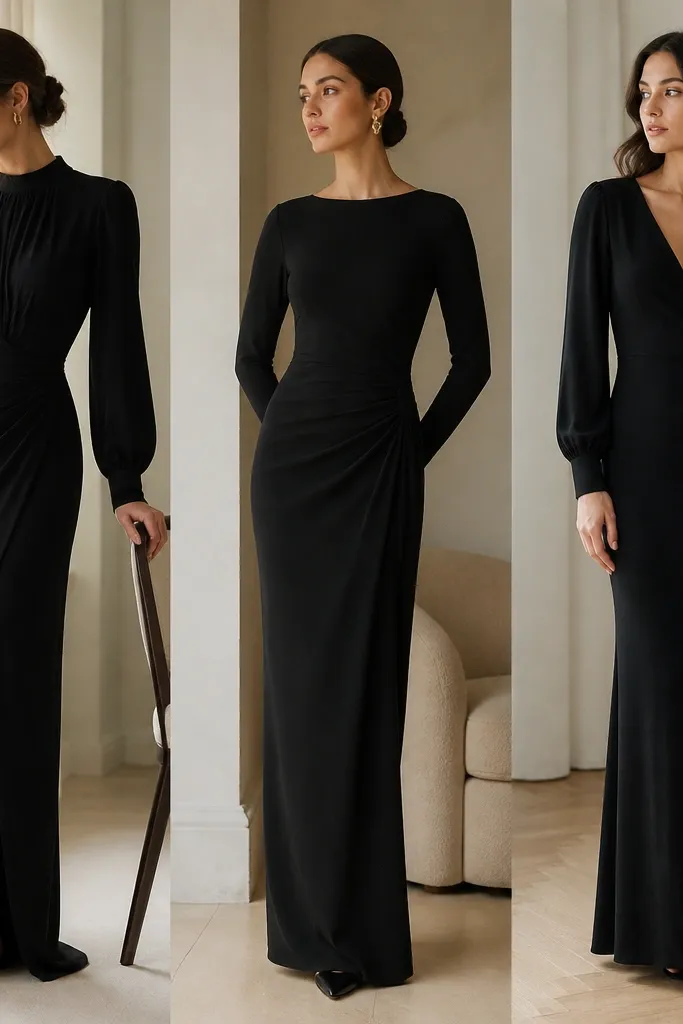
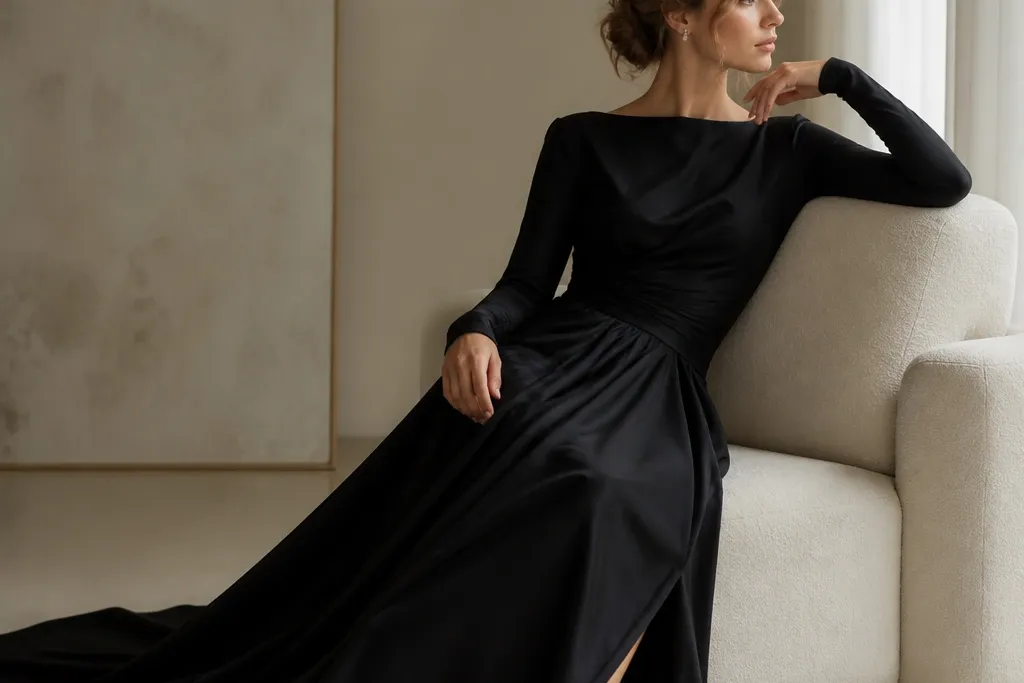
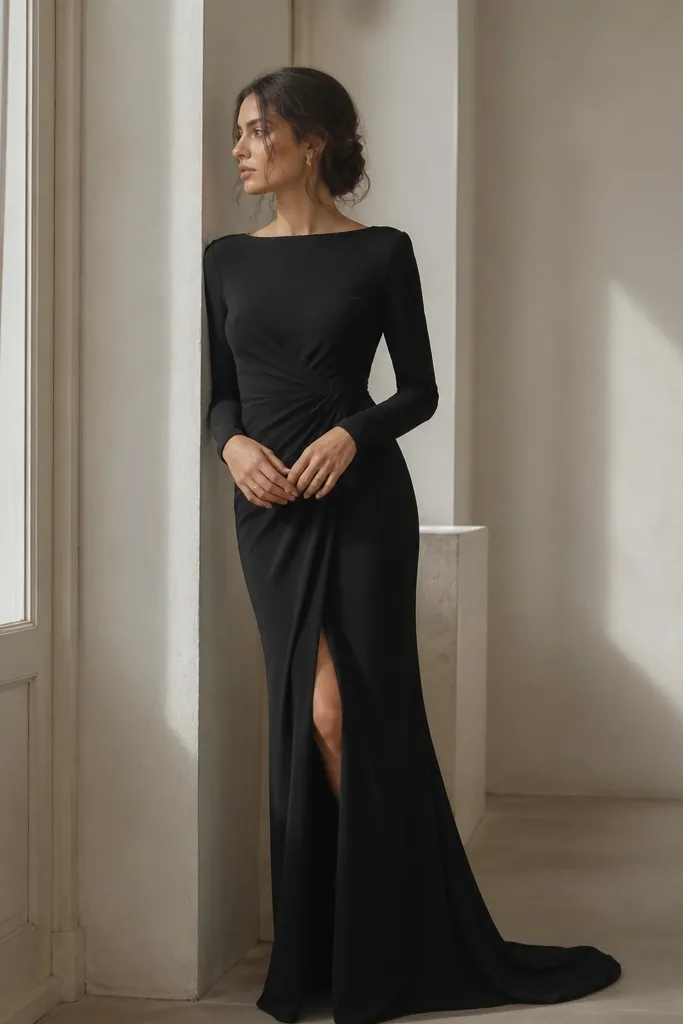
1. Satin-back crepe long sleeve with a clean bateau neckline
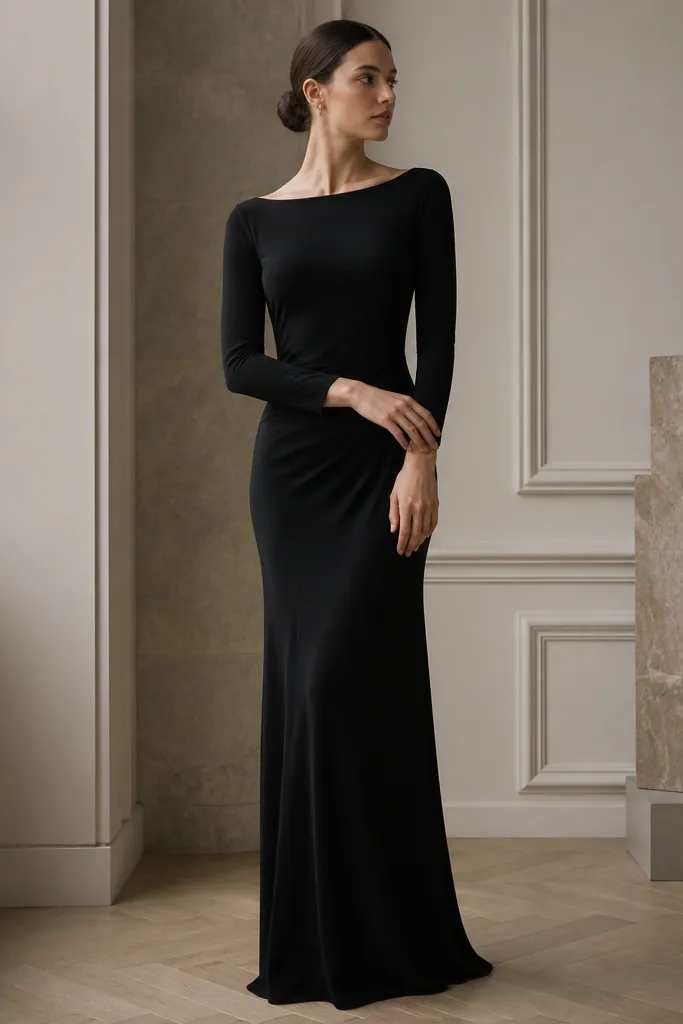
This cut works because bateau necklines sit flatter when the fabric has structure. Satin-back crepe gives you that soft sheen without looking glossy like cheap costume satin. The fitted sleeves keep the silhouette sleek, and the straight skirt reduces the risk of bunching around the hips. In photos, the continuous line from neckline to hem reads "tailored" instead of "pulled from a rack."
Look for a dress with a lining or a thicker underlayer so the neckline doesn't collapse. The cuff should be smooth - no extra gathers at the wrist. Pair it with a low-contrast shoe like black or gunmetal to keep the leg line uninterrupted.
Pro tipDo a quick flash test: stand 2 feet from a window and take one photo. If the neckline puckers or the sheen becomes patchy, the fabric is too thin.
AvoidAvoid satin-back styles that feel slippery and thin - they twist at the neckline and show body lines through the sleeves.
2. Matte jersey long sleeve with a deep V and waist seam
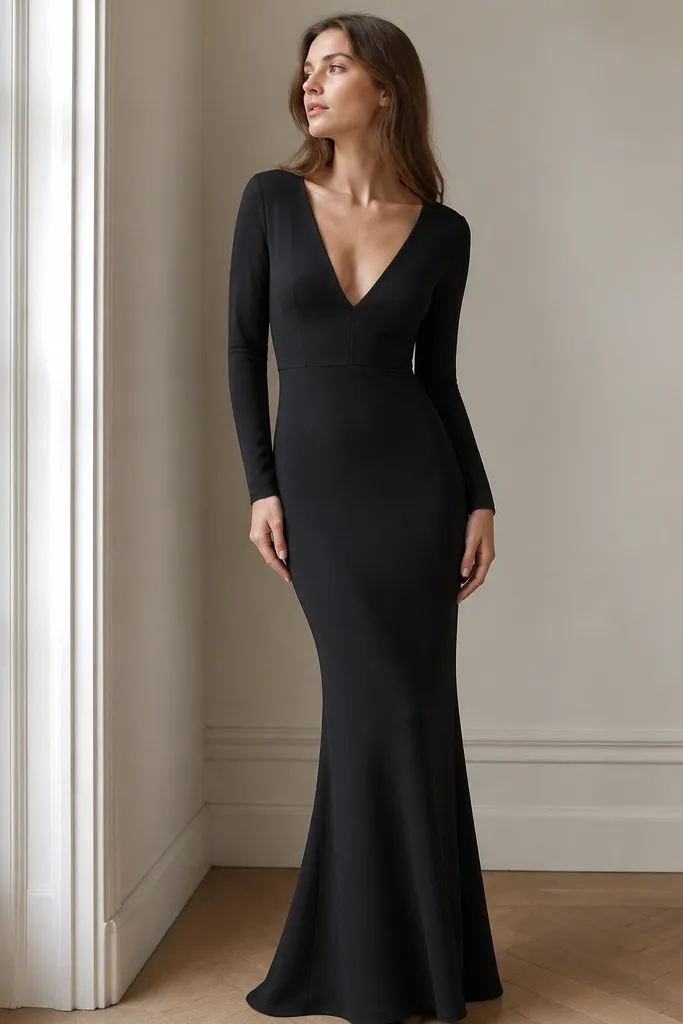
Matte jersey with good recovery hugs without wrinkling - that's what you want for a long sleeve evening dress. The deep V adds elongation, and the waist seam keeps the shape from turning into a single column. I like this when I'm wearing statement earrings because the neckline gives you focus while the sleeves keep it classy. The matte finish also hides minor texture differences better than shiny fabrics.
Choose a waist seam dress over a continuous one-piece if you have curves - it controls the middle. The jersey should feel thick when you stretch it at the shoulder; if it stretches like a T-shirt, it will bag out after one night. Keep the hem at or slightly above the floor for a clean break over heels.
Pro tipPin the V neckline with fashion tape during your try-on. If it gaps when you move, the dress cut is off.
AvoidSkip jersey that clings too aggressively. It shows every fold at the elbows and reads less formal fast.
3. Mesh overlay sleeves with a solid lined body
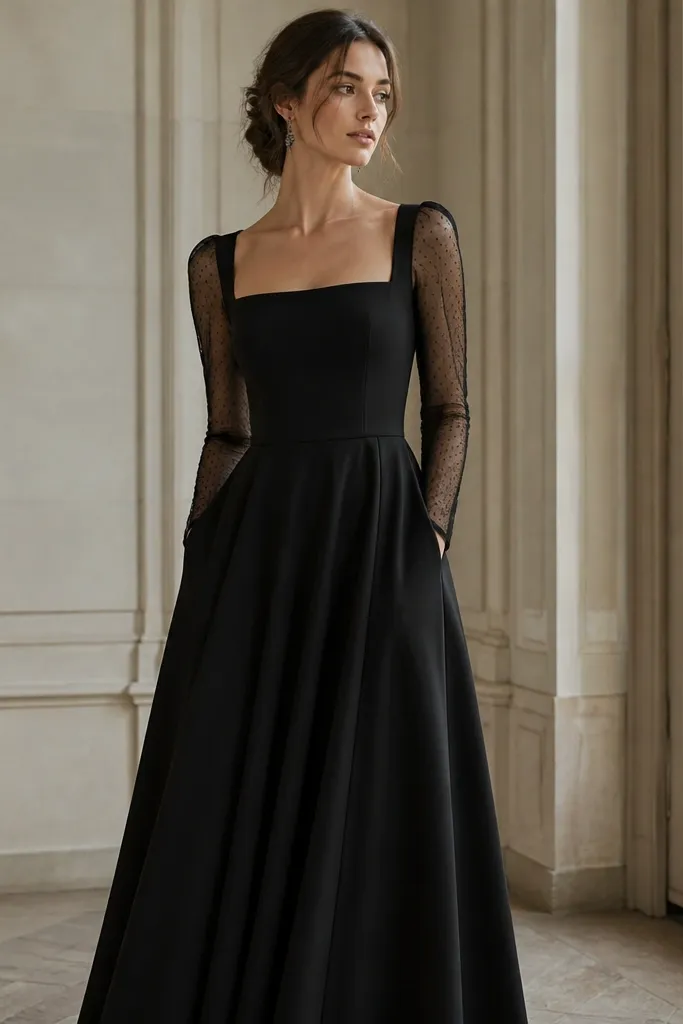
Sheer mesh sleeves can look expensive when the body is fully lined and opaque. The contrast - solid body, see-through sleeves - gives a "designed" look without needing heavy embellishment. The mesh adds dimension to black, especially under warm indoor lighting. I've seen this style photograph best when the mesh pattern is tiny and consistent, not large and scattered.
Make sure the sleeve mesh is lined at the underarm so you don't get scratchy edges. The bodice should have a lining that matches the black tone so there's no gray cast. Pair with a strapless or longline bra that doesn't peek - square necklines are unforgiving.
Pro tipCheck the underarm seam while you raise your arms. If you see skin through the lining gap, it will look messy later.
AvoidAvoid dresses where the mesh extends into the bodice - that's where cheap "sheer black" turns into a look that feels too casual.
4. Wrap-style long sleeve with a tie belt on the outside
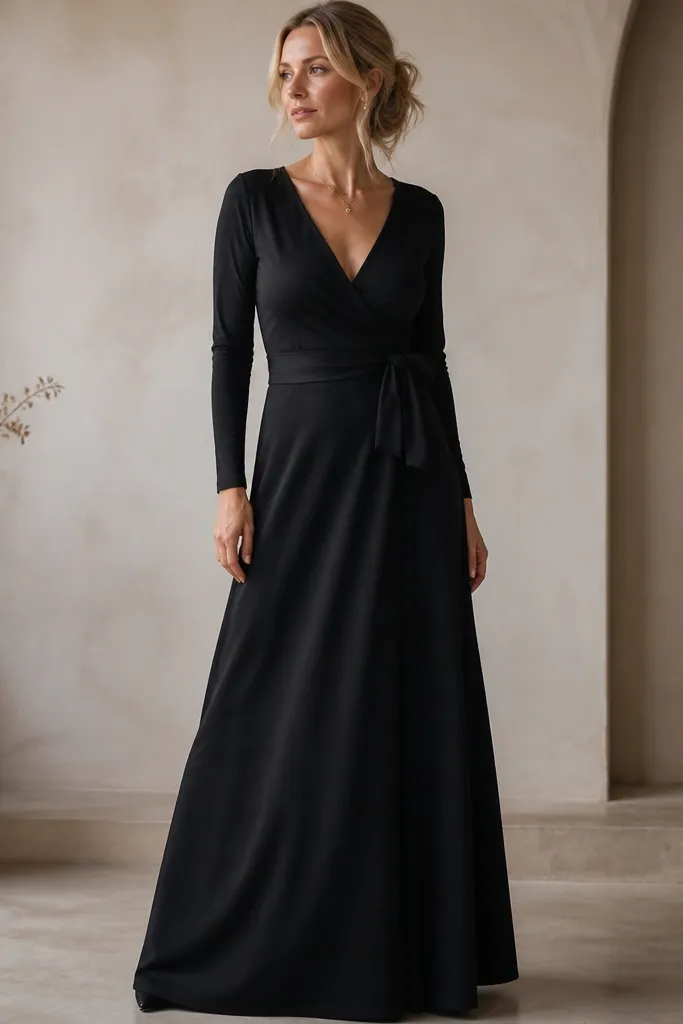
A wrap front lets you control fit at the bust and waist without fussing with sizing. The outside tie belt gives shape and keeps the wrap from shifting, which is the biggest problem with many wrap dresses. When the fabric has weight, the wrap edge falls clean and doesn't curl. This style looks flattering in motion because the skirt has a gentle swing.
Go for a fabric like crepe or ponte with a lining rather than thin satin. The tie belt should sit at your natural waist, not below it, or the wrap looks like it's hanging. Keep the overlap wide enough that the V stays modest during walking.
Pro tipUse a hook-and-eye or fashion tape on the wrap edge for the first hour. After that, you'll know if it shifts when you sit.
AvoidSkip wrap dresses where the fabric is too slippery - the tie slips, and the neckline opens in a way that looks careless.
5. Off-center button front with long sleeves and a high slit
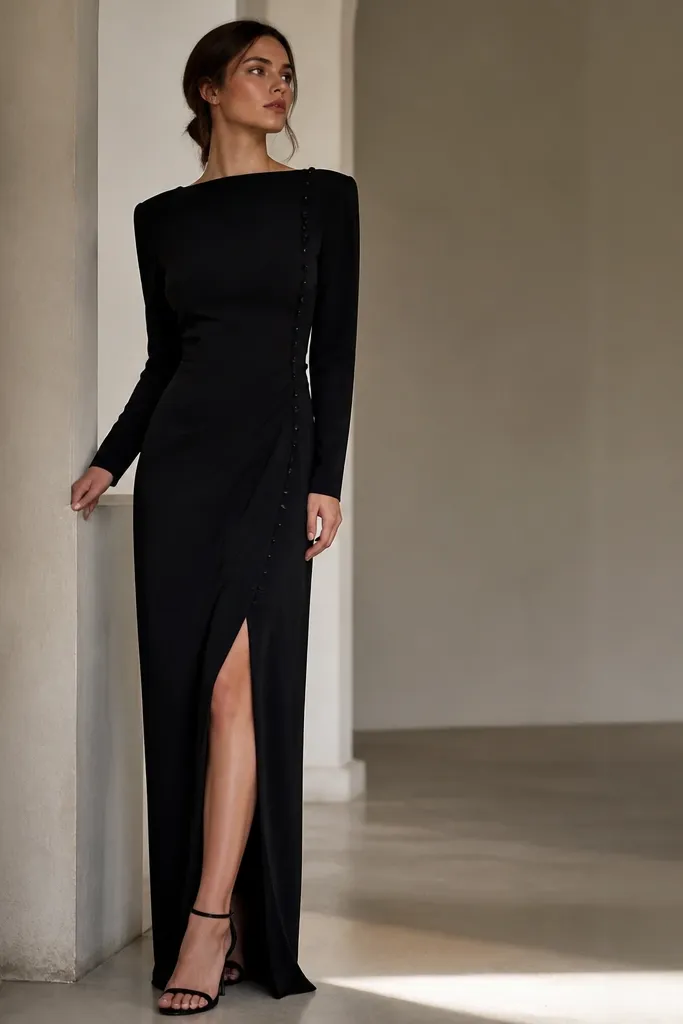
An off-center button front adds structure and a vertical line, so the dress reads intentional. The high slit can look classy if the seam is straight and the skirt fabric holds its shape. I like this for dinners where you move a lot - the slit gives you leg without turning the whole dress into a "night club" vibe. Buttons also photograph well because they catch light as small highlights.
Choose buttons that match the fabric - matte black or covered buttons - so they don't look like shirt buttons. The slit should start around mid-thigh when standing, not too high, or it looks like a shortcut. Wear pointed-toe heels to keep the slit from pulling wide.
Pro tipWhen you try it on, walk down a hallway. If the button placket gapes at the bust or waist, it will gap all night.
AvoidAvoid shiny, oversized buttons on a soft jersey. The combination looks costume-y fast.
6. Satin column dress with gathered long sleeves at the shoulder
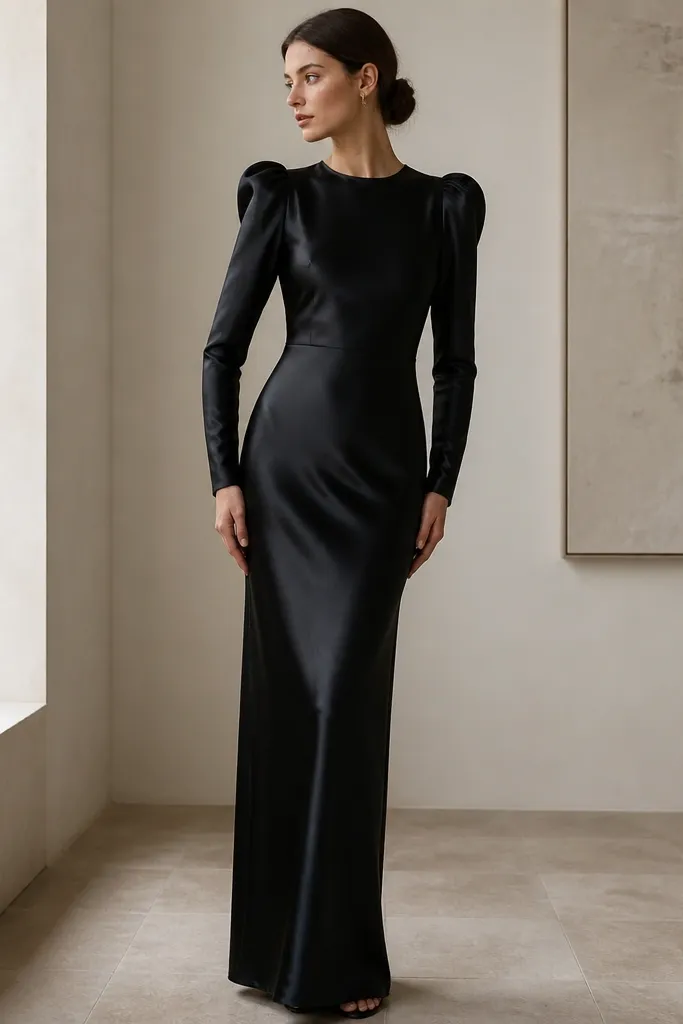
Shoulder gathers add drama without needing a big skirt. On satin, the gathers catch light in a controlled way, which makes your upper body look lifted. The column skirt keeps it sleek, so you don't end up with a "too much" silhouette. This is one of my go-to evening shapes when I want something photogenic but still body-conscious.
Pick satin that feels thick and doesn't ripple when you pinch it. If the satin is thin, the gathers turn into wrinkled folds. The sleeve taper matters - it should tighten at the forearm so it doesn't bunch around your elbow.
Pro tipBring a small steamer. Steam the sleeve gathers flat first, then let them rest to reshape for the photo-ready look.
AvoidSkip satin columns with no waist shaping if you have a straighter torso - they can look like a long robe.
7. Lace long sleeves over a matte crepe lining
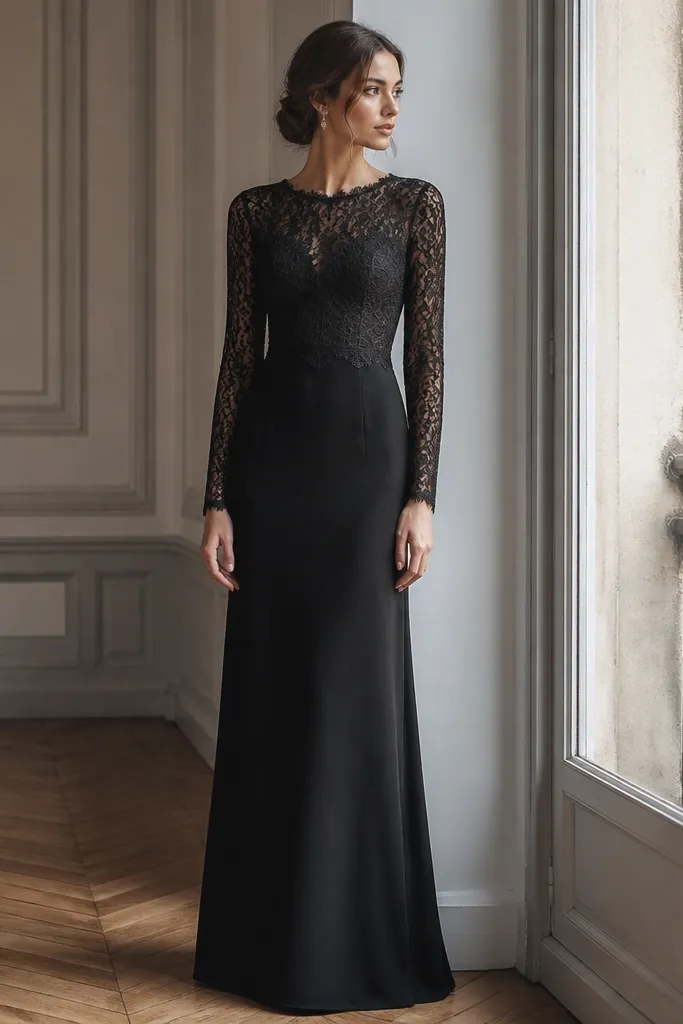
Lace looks best when it's not doing the entire job. Lace sleeves over a matte crepe base keep the dress elegant and reduce the risk of a "see-through everywhere" look. The matte lining dampens shine, so the lace pattern reads crisp instead of washed out. I like this when I'm wearing minimal jewelry because the lace does the talking.
Check the lace density at the forearm. If you can see your skin tone clearly through the lace without a lined effect, choose a darker lining or a different dress. The neckline should have a solid base underneath so it doesn't gape. Hem should be finished - lace edges that look raw snag easily.
Pro tipTap the lace with your fingertip. If it feels rough, it will itch by hour two - I've worn those and regretted it.
AvoidAvoid lace dresses with uneven lace spacing across the sleeves. It reads like a cheap remake when photographed.
8. Sculpted corset bodice with long sleeves and a smooth skirt
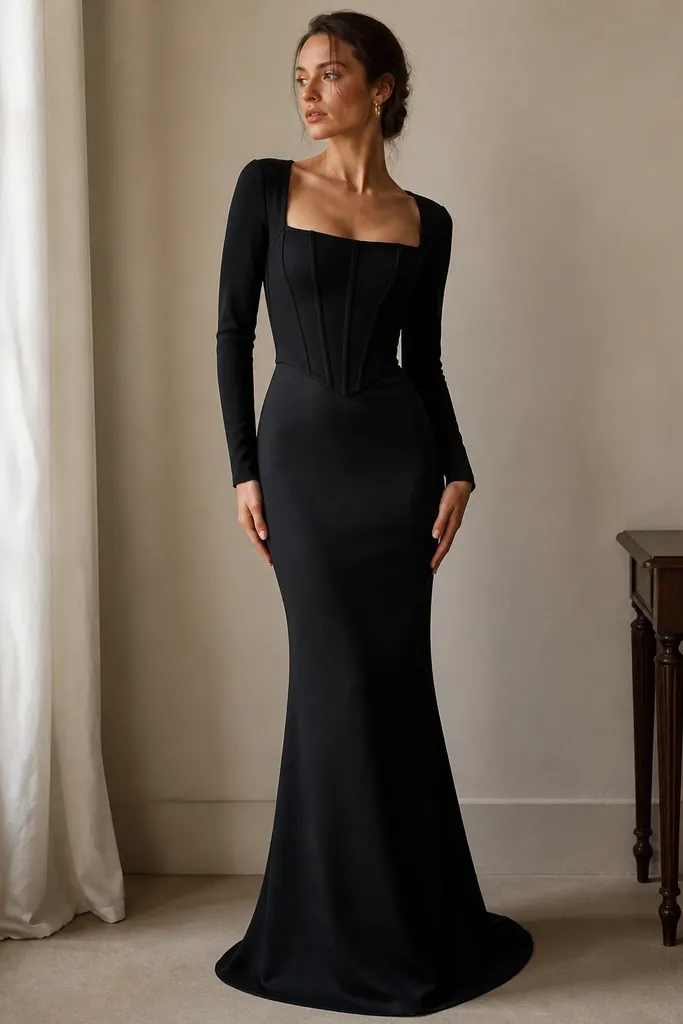
A structured corset bodice makes black look tailored because the shape is built, not stretched onto you. Long sleeves keep it covered and classy while the seams define waist and bust. The smooth skirt prevents bulk, so the corset doesn't feel like it's fighting the rest of the dress. This style is also forgiving if you want a more defined silhouette without a stiff skirt.
Look for boning that sits close to the seam - you shouldn't feel hard edges digging into your ribs. The sleeve fabric should be opaque and sturdy so it doesn't cling to the corset lines. For length, aim for a hem that lands at your ankle bone with heels on.
Pro tipWear the dress for 10 minutes sitting and standing. If you feel twisting at the waist seam, the corset panels are cut wrong for your body.
AvoidAvoid thin corset bodices made from stretch-only fabric. They look flat and collapse after sitting.
9. Satin charmeuse long sleeve with ruching at the waist
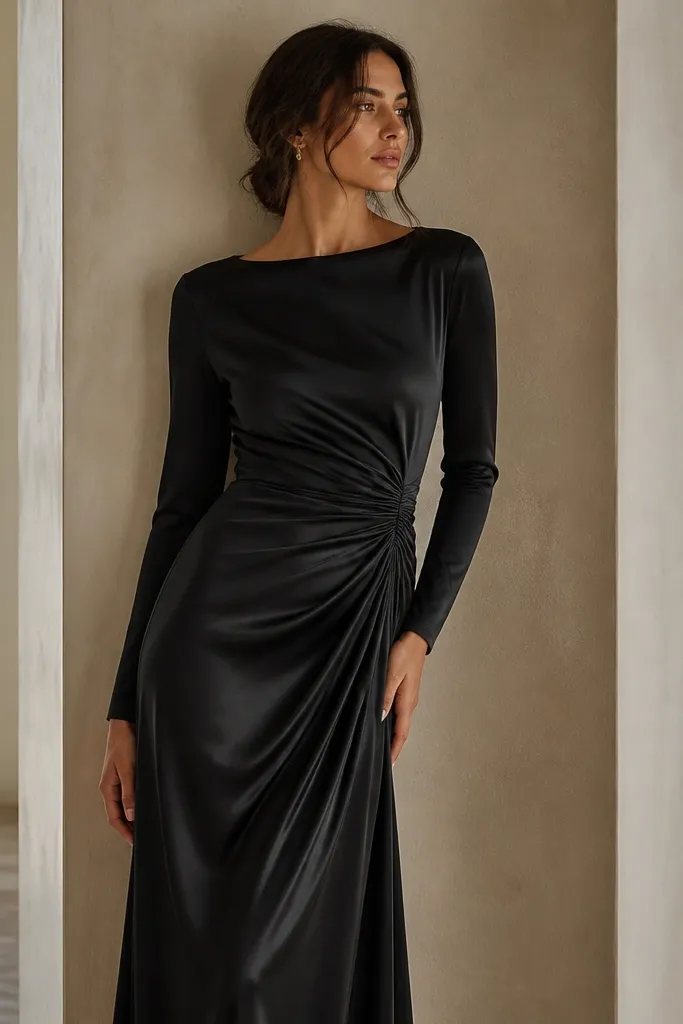
Ruching gives you control over the waist without adding panels that can bunch. Charmeuse has a liquid drape, and the ruching helps the fabric fall in flattering curves instead of straight lines that emphasize width. This is the dress I reach for when I want comfort but still want a defined shape in pictures. The sheen is controlled because the ruching catches light in small highlights.
Make sure the ruching is sewn, not just elastic gathered, or it will relax by the end of the night. The sleeve should hang smoothly; if it's too tight at the elbow, it will crease. Pair with simple drop earrings and a small clutch because the dress already has detail at the waist.
Pro tipCheck the ruching seam from the side. It should sit flat - if it pulls into a ridge, it will show under flash.
AvoidSkip charmeuse dresses with no lining - they show bra lines and can look see-through around the waist.
10. Mock neck long sleeve with a satin stripe panel
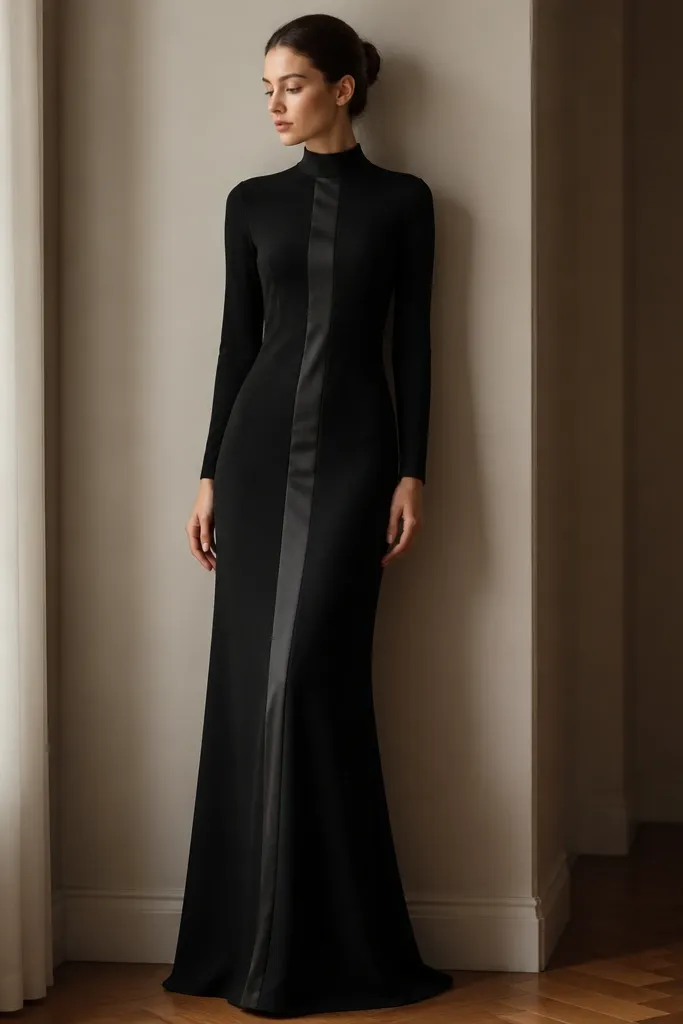
A mock neck cleans up the upper body and keeps you looking polished, even if you wear minimal accessories. The satin stripe adds a vertical highlight that makes black look dimensional instead of flat. I like this when I'm in a colder venue or when the lighting is dim - the stripe picks up light without glitter. The sleeve length stays elegant because the neckline is higher and the shoulders look balanced.
Choose the stripe to be narrow - about 1 to 2 cm - so it looks intentional, not like a costume seam. The mock neck should have a soft facing so it doesn't scratch. Hem should be a smooth fall; if it's too stiff, the stripe will look like it's sitting on top of the skirt.
Pro tipTake a close-up photo of your collarbone area in a mirror. If the mock neck stands away from your skin, the facing is cut wrong.
AvoidAvoid mock necks with thick, stiff fabric. They sit weird under stage lighting and make the face look harsher.
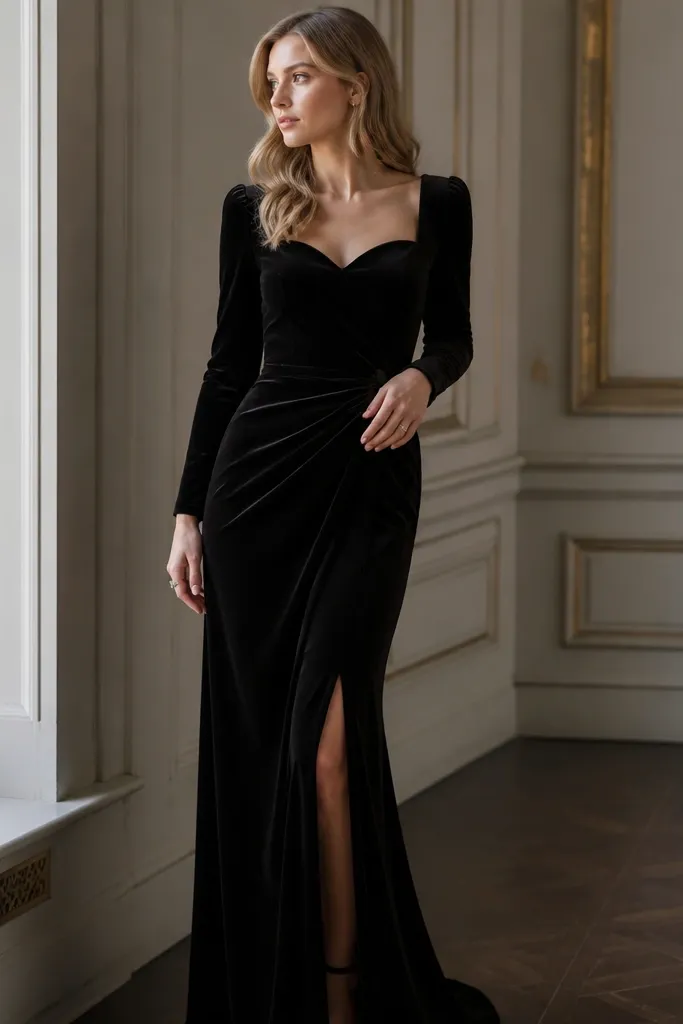
11. Velvet long sleeve with a straight skirt and hidden back zipper
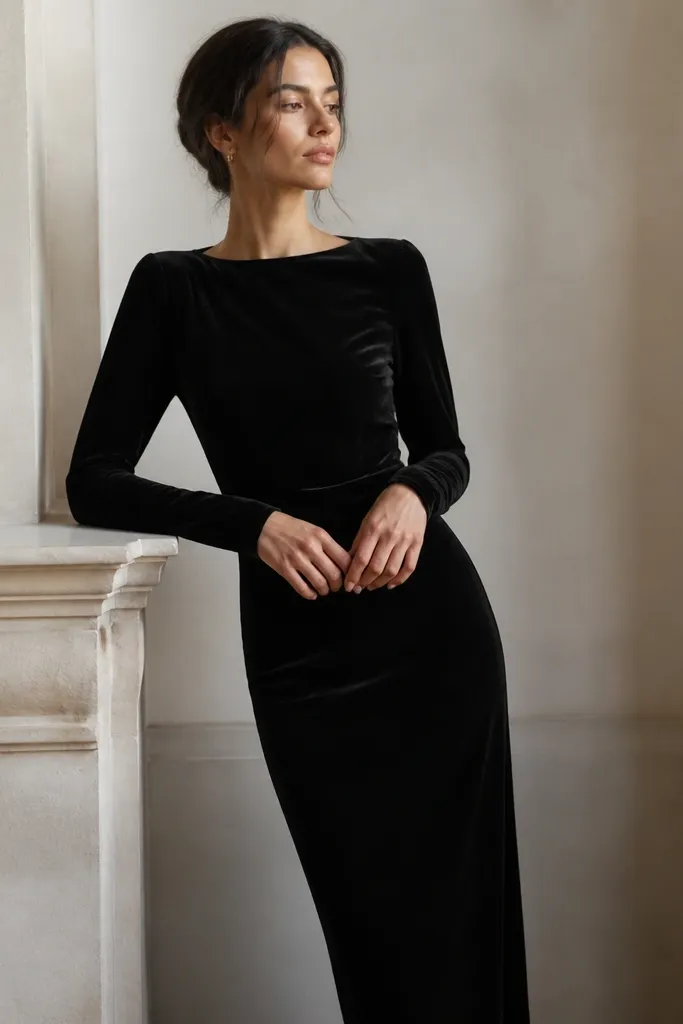
Velvet makes black feel expensive because it absorbs light and gives a soft texture instead of shine. A straight skirt keeps the look modern and prevents the dress from ballooning at the hips. Hidden zippers matter because visible hardware cheapens the front when you take photos and lean forward. Velvet also hides minor fabric flaws that satin can highlight.
Pick velvet with a dense pile that feels even when you rub it lightly. If it looks patchy, it will photograph patchy too under flash. The sleeves should be fitted but not tight at the forearm; velvet has stretch limits, so too-tight sleeves pull at the seams.
Pro tipUse a lint roller right before you go. Velvet shows lint instantly, and it ruins black photos.
AvoidAvoid crushed velvet that looks uneven even when you're not moving - it reads worn out.
12. Organza long sleeve over a jersey body
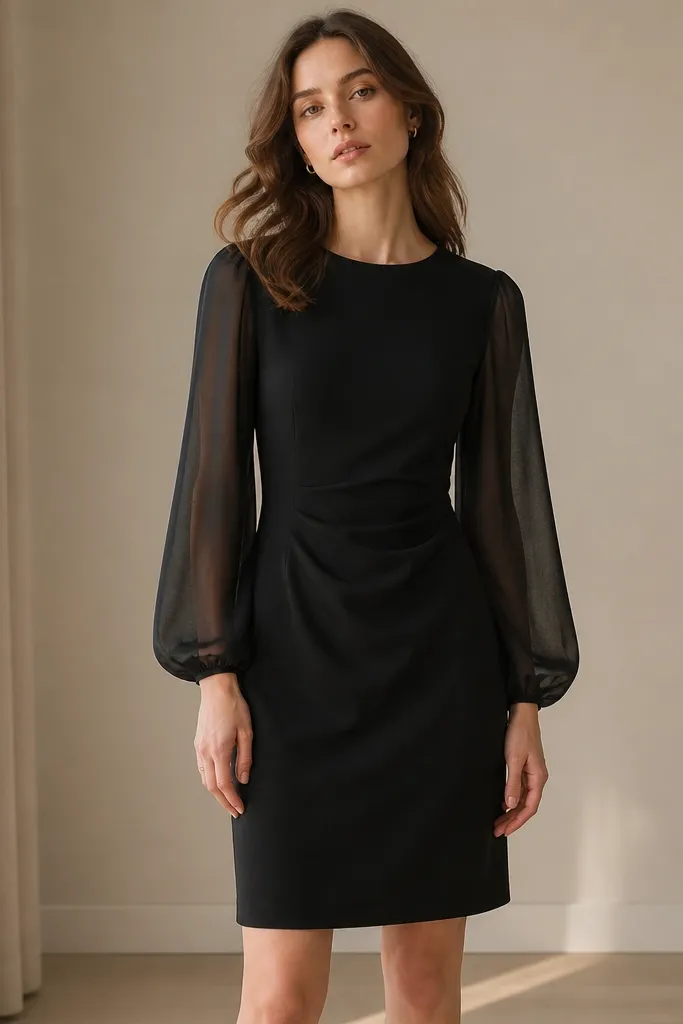
Organza sleeves add movement without exposing skin. Over a jersey body, you get contrast: structured coverage where you need it, and light-catching volume where you want drama. It's a smart choice if you hate clingy sleeves but still want a long sleeve evening look. In motion, organza looks intentional; in still photos, it frames the arms.
The jersey body should be thick enough to avoid showing through at the seams. Organza sleeves need a clean finish at the cuff - look for a narrow band or facing, not raw edges. Keep the neckline simple so the organza reads as detail, not clutter.
Pro tipWhen trying it on, move your arms in front of a mirror. If the organza collapses flat, the sleeve weight is wrong.
AvoidSkip organza sleeves that are too sheer and unlined. They can look like costume fabric in indoor lighting.