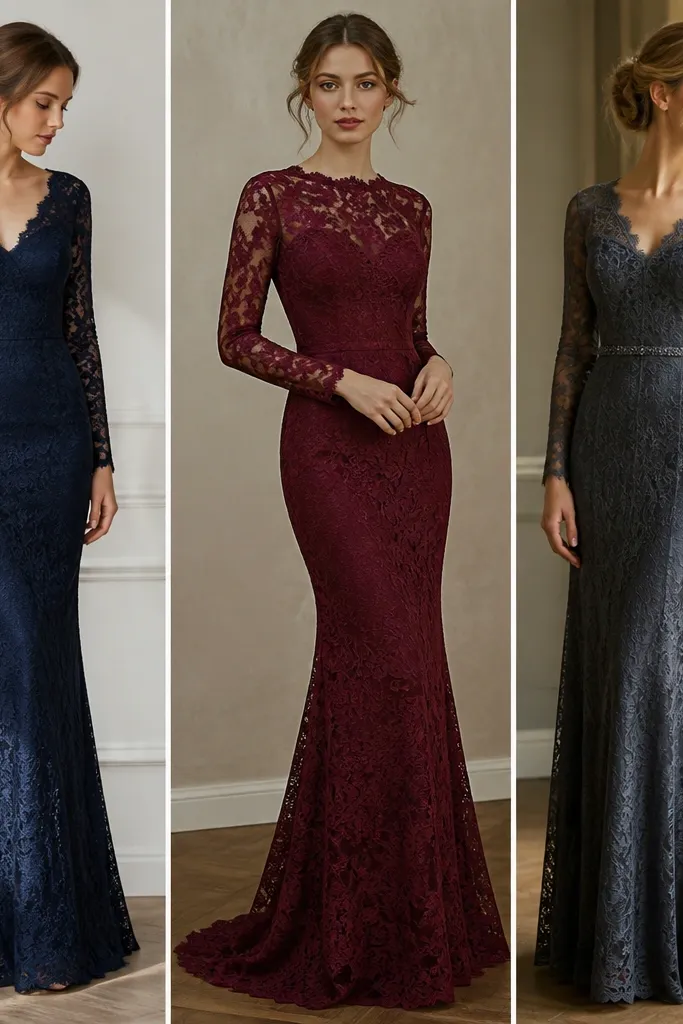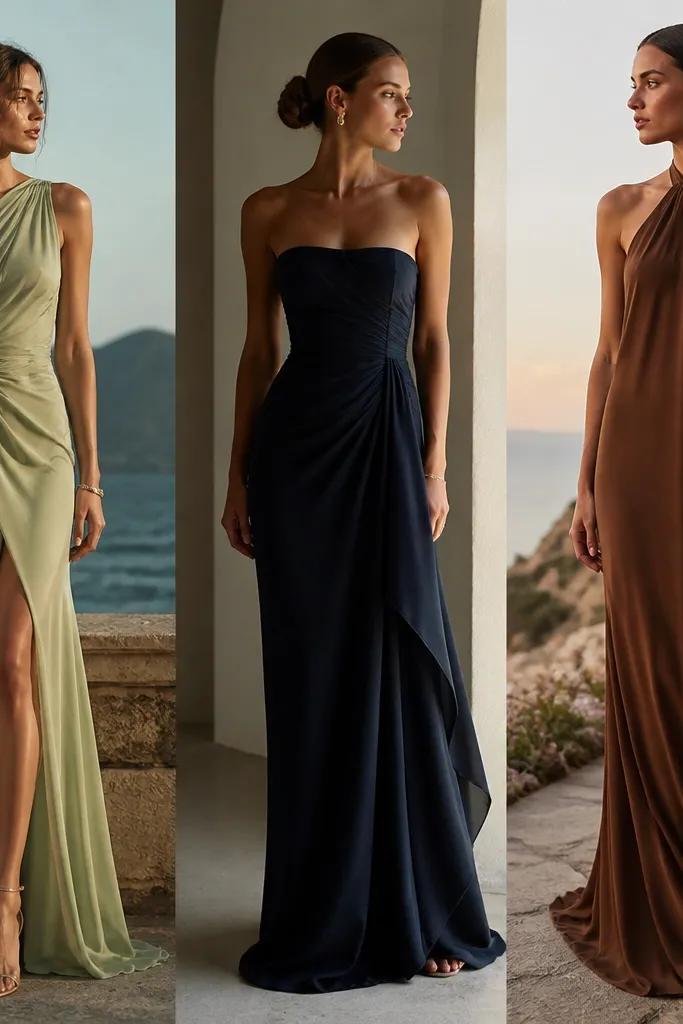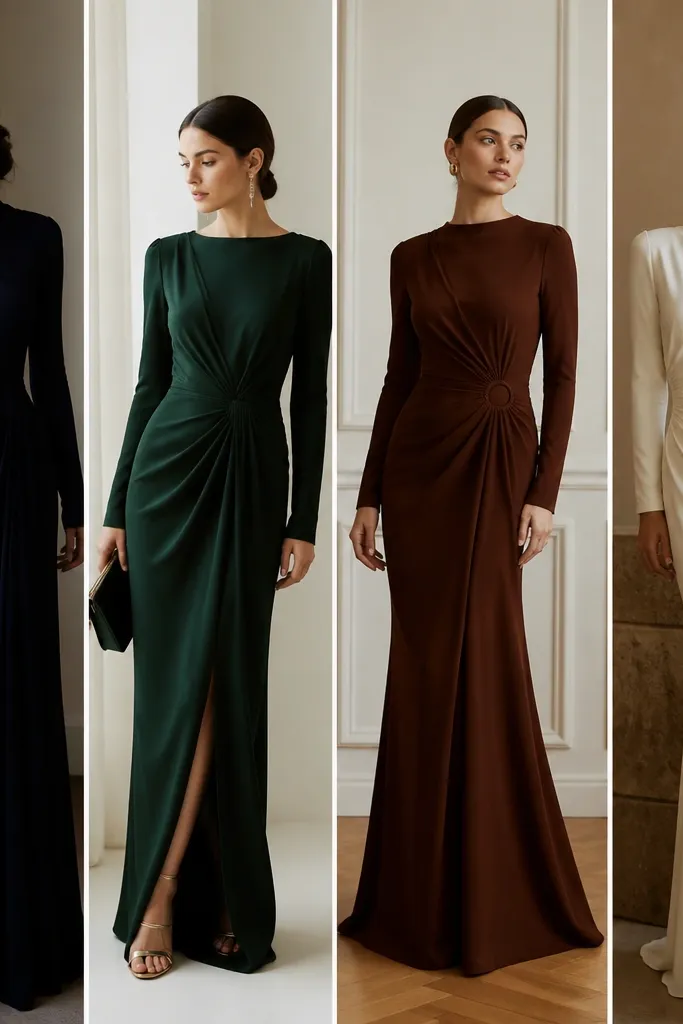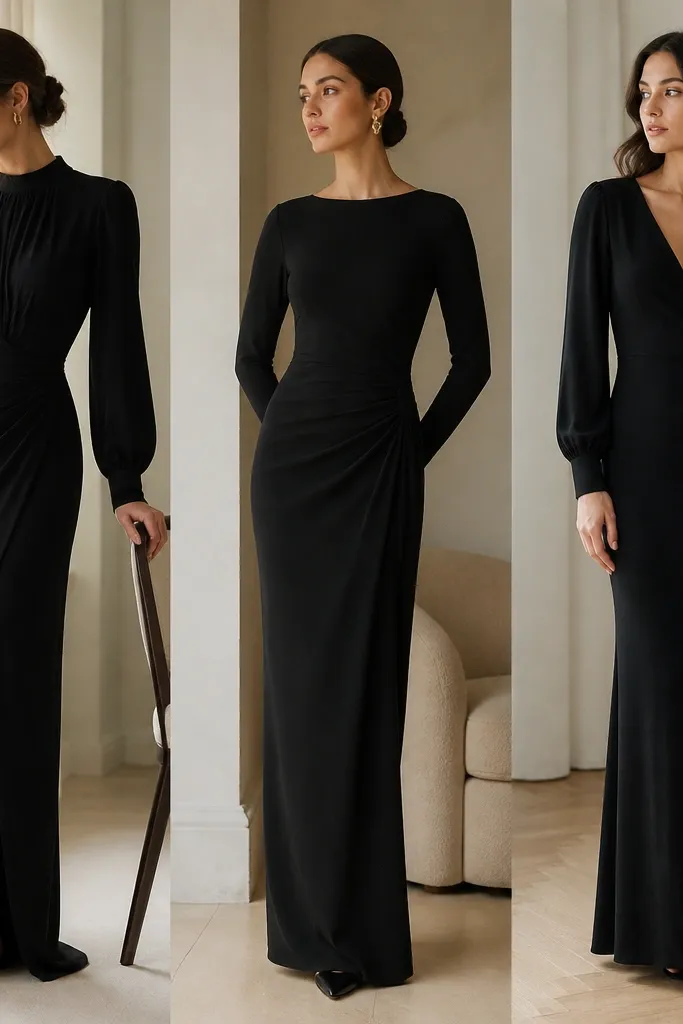
1. Sculpted-Bust Velvet Column with Clean Neckline
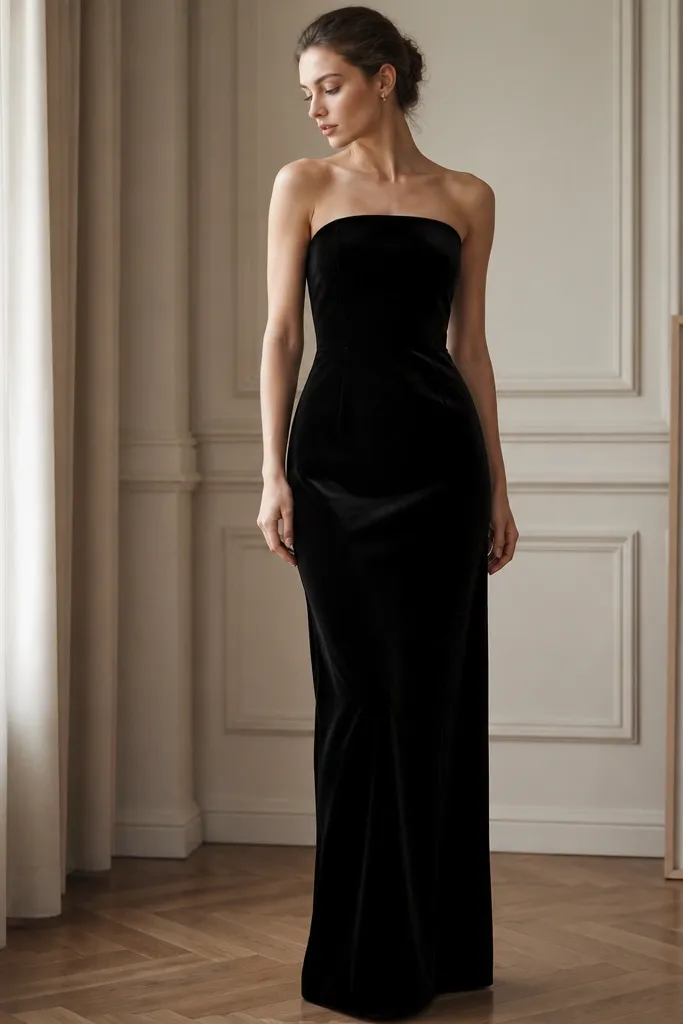
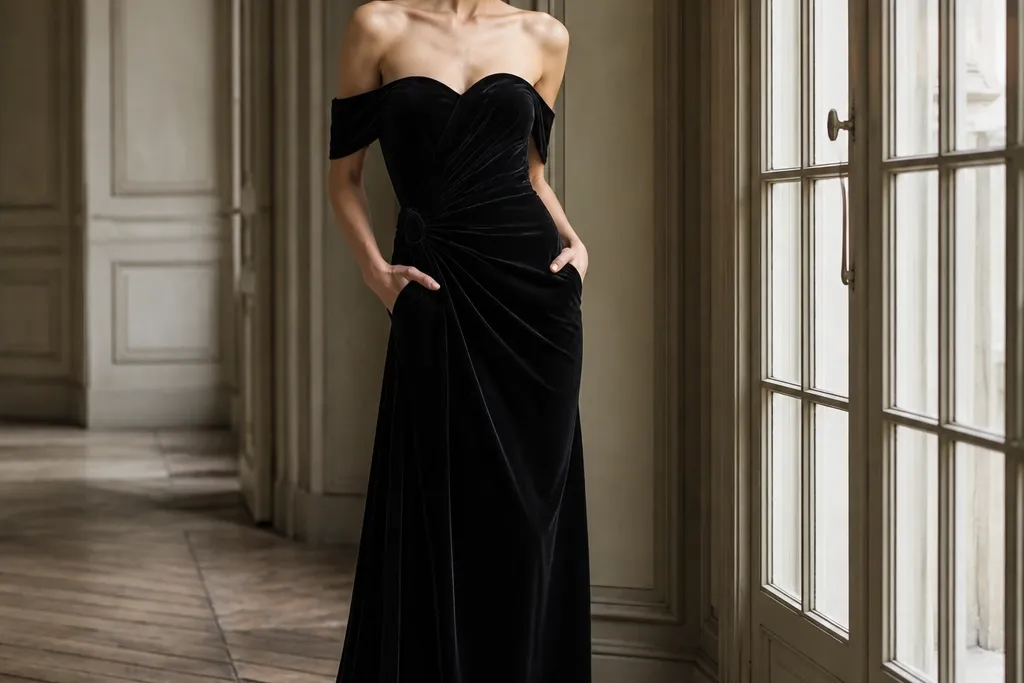
This one works because the bodice shaping controls the fabric at the bust and waist, so the velvet doesn't "bunch" when you move. A column silhouette also shows the quality of the velvet pile - cheap velvet looks blotchy when it stretches over the torso. The clean neckline keeps the focus on the velvet's texture, not on busy details.
Look for a gown that has at least light structure in the bodice, even if the skirt is fluid. Choose a length that hits the floor without pooling - I aim for about 1 to 2 cm break at the shoe. If you can, try it with the heel height you'll actually wear so the velvet doesn't drag and crush the pile at the hem.
Pro tipAdd a single satin or silk camisole under the neckline if the velvet feels itchy. Match the camisole color to the gown's lining so you don't see a contrast at the edges.
AvoidSkip gowns where the bodice looks "empty" or loosely draped - the velvet will crease and look cheap fast.
2. Velvet Slip Dress Longline with Satin Trim
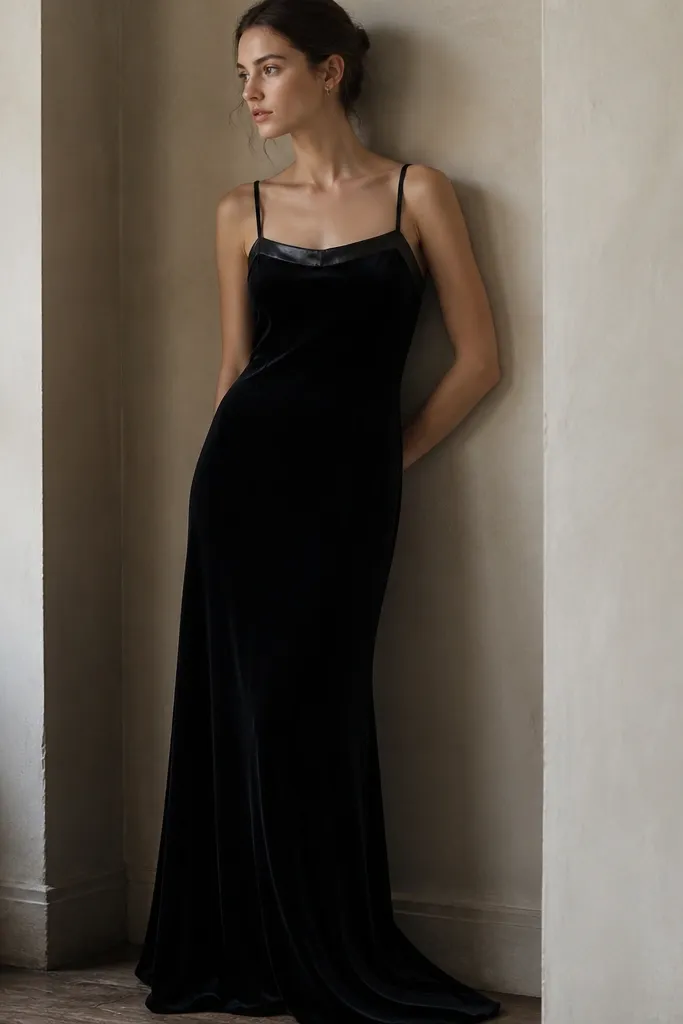
A longline slip cut flatters because it gives you length and keeps the velvet's sheen controlled. Satin trim matters - it frames the neckline so the velvet pile doesn't fray visually at the edges. The slip structure also photographs well because it doesn't create a lot of texture lines that can look messy in low light.
Wear it with a strap bra or a longline bra in black, and check that the straps sit flat against your shoulders. If the gown is too loose in the torso, ask for a small side-tuck - even 1 cm per side changes how smooth the velvet looks. Keep the hem crisp; velvet crushed at the bottom reads worn.
Pro tipUse fashion tape at the neckline or side seams for the first hour of wearing. Velvet slip cuts shift slightly with movement, and tape stops strap creep.
AvoidDon't pick one with wide armholes unless you like the look - it makes the velvet look sloppy around the underarm.
3. Off-Shoulder Velvet Gown with Hidden Boning
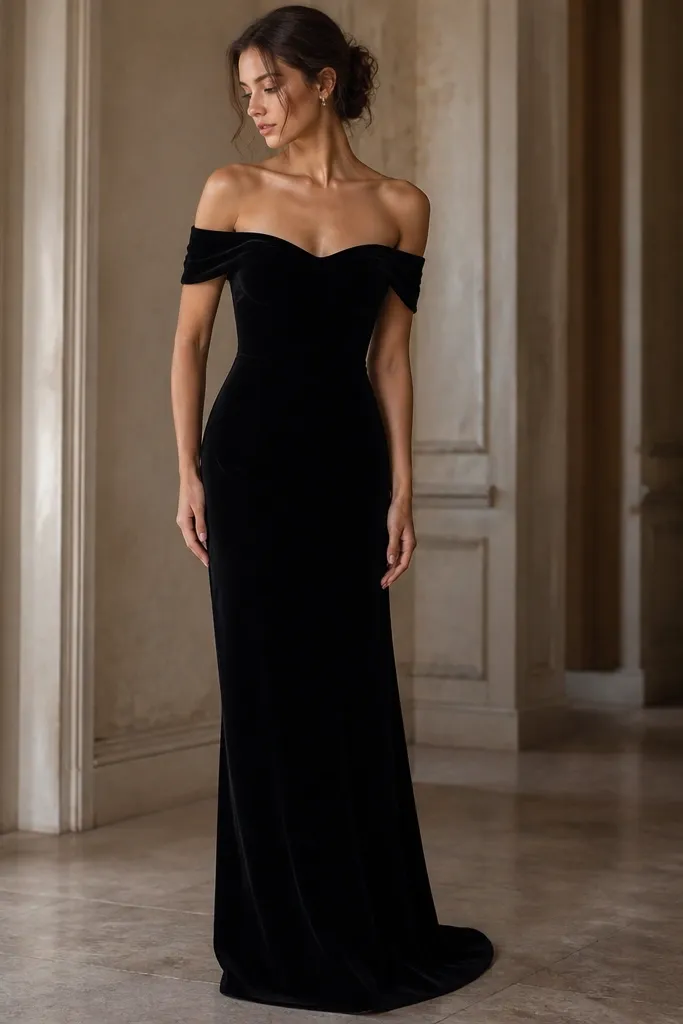
Off-shoulder velvet looks dramatic because the light hits the neckline and collarbone area first. Hidden boning keeps the velvet from sagging - without it, the neckline collapses and the velvet pile looks tired. When the bodice stays lifted, the whole gown reads "intentional" even in simple styling.
Check the inside construction: you want boning channels or at least firm seam finishing at the sides. The gown should sit high enough that you still see your shoulders when you raise your arms for photos. If you're between sizes, size down for the bodice and let the skirt hang; the skirt can be let out more easily than the neckline.
Pro tipSteam the neckline lightly from the inside first, then finish with a quick pass from the outside. Off-shoulder velvet shows creases at the collar edge.
AvoidAvoid off-shoulder gowns that rely only on elastic - they stretch and the velvet goes droopy quickly.
4. Wrap-Style Velvet with a Defined Waist Tie
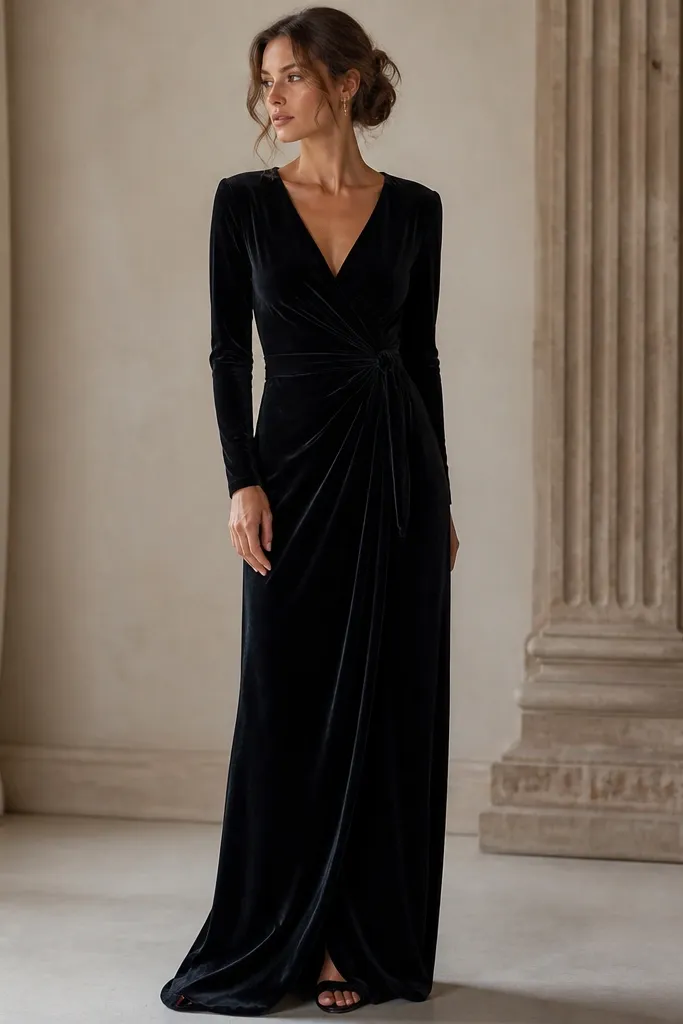
Wrap construction gives you shape without adding bulk. The defined waist tie tells the velvet where to fall, and that controls the sheen - light catches flatter planes when the body line is clear. It also lets you adjust fit at the hips, which matters with velvet because the pile shows pulling and tension.
Choose a wrap gown where the overlap is deep enough to prevent flashing when you walk. I like a tie that hits around the natural waist, not the high empire line. If you have a bigger bust, look for internal side ties or a structured lining to keep the front from gaping.
Pro tipTuck the tie end into the back seam after tying. Velvet tie ends swing and can crush the pile where you don't want it crushed.
AvoidSkip wrap gowns with a shallow front overlap - the velvet gets strained and looks stretched right away.
5. High-Slit Velvet Skirt with Straight Bodice
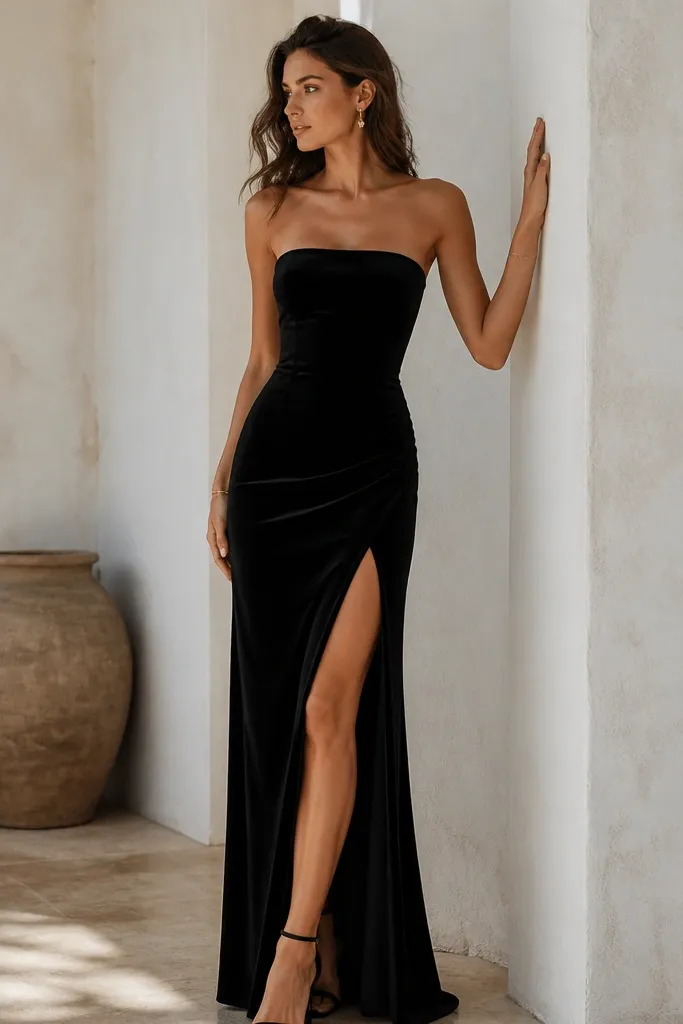
High slits look expensive when the slit opening stays clean and the bodice doesn't fight the movement. The straight bodice controls the fabric at the top so the slit doesn't create weird folds. Velvet at the slit edge can look sharp and glossy if the lining is satin or silk-like.
Check that the slit is finished with lining or a facing - raw edges on velvet look messy when you step. Wear nude or black tights depending on venue temperature, and pick heels that help your stride stay smooth. Tailor the hem so the slit opening hits the right spot when you stand - I aim for it to land around mid-thigh for a classic look.
Pro tipPractice walking in it at home. If the slit pulls open unevenly, the seam needs a minor adjustment before the event.
AvoidAvoid slits that are too low - they bunch and make the velvet look heavy instead of sleek.
6. Velvet Halter with Open Back and Straight Skirt
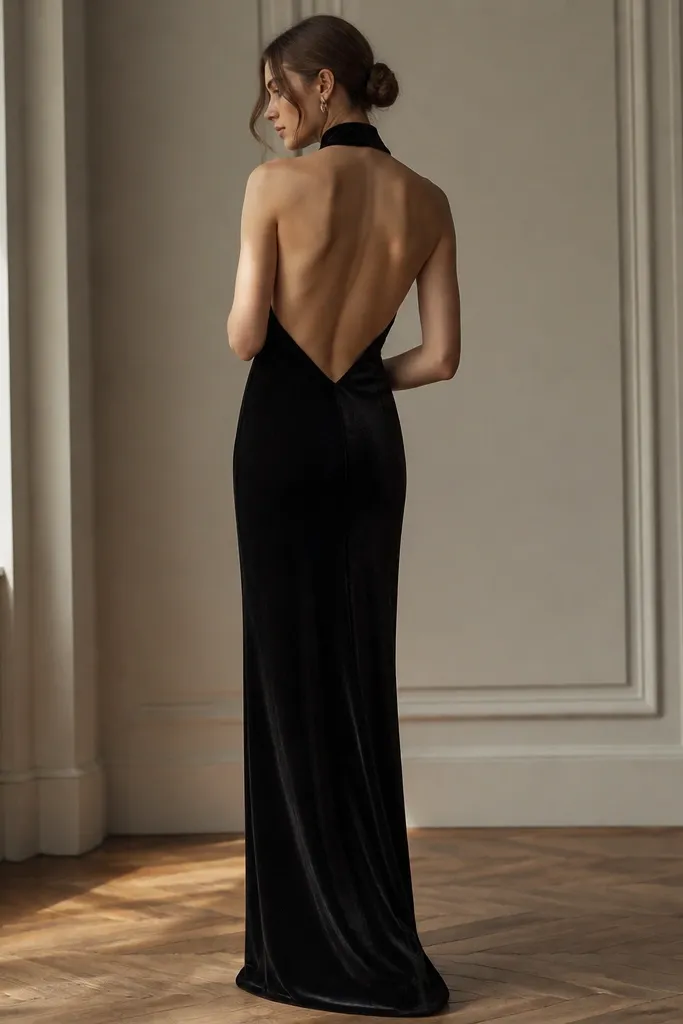
Halter necklines frame the shoulders and keep the velvet from shifting at the upper chest. The open back makes black velvet feel modern because it shows skin against the deep pile. Straight skirt lines keep the look from getting too busy when the back is already doing the work.
Use a strapless or low-back bra solution - I like adhesive cups with a thin band that won't show through velvet. The halter should sit snug at the neck without digging. If the open back is too wide, a quick tailor can take in the side seams by 0.5 to 1 cm each side to sharpen the V.
Pro tipBring a small sewing kit and a safety pin for the halter knot. Velvet stretches slightly over the night and you'll want the neckline to stay even.
AvoidSkip halters that twist in the mirror - twisted straps ruin the look in photos.
7. Sleeveless Velvet Gown with Low Back and Fluted Hem
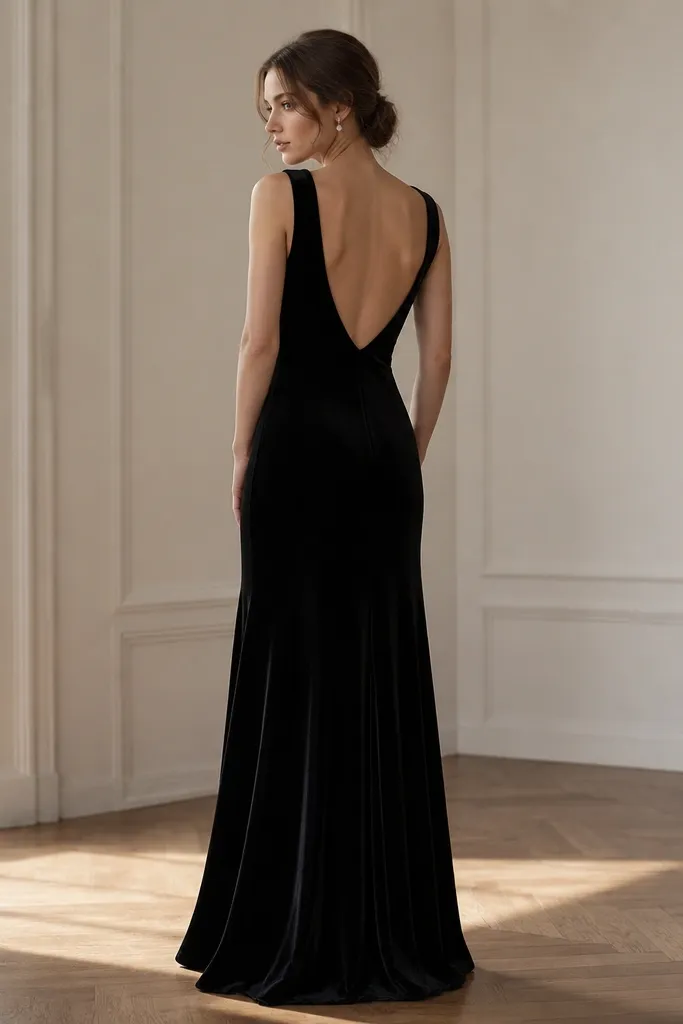
A fluted hem gives movement without adding ruffles all over the gown. On black velvet, the hem shape catches light differently as you walk, which makes the fabric look higher-end. The low back keeps it interesting even when the front is simple.
Pick a fluted hem that still lands close to the floor - too much wave makes it trip and crushes the pile. If you're tall, check the back length - low-back styles can become shorter at the spine. Pair it with minimal jewelry so the hem shape stays the visual star.
Pro tipPress the hem gently with a steamer and hold the fabric against a flat surface for 10 seconds. Velvet re-sets quickly if you steam and flatten.
AvoidAvoid fluted hems that bunch near the ankles - that crushed velvet looks worn in 20 minutes.
8. Velvet Mermaid Gown with Soft Tailor-Lined Skirt
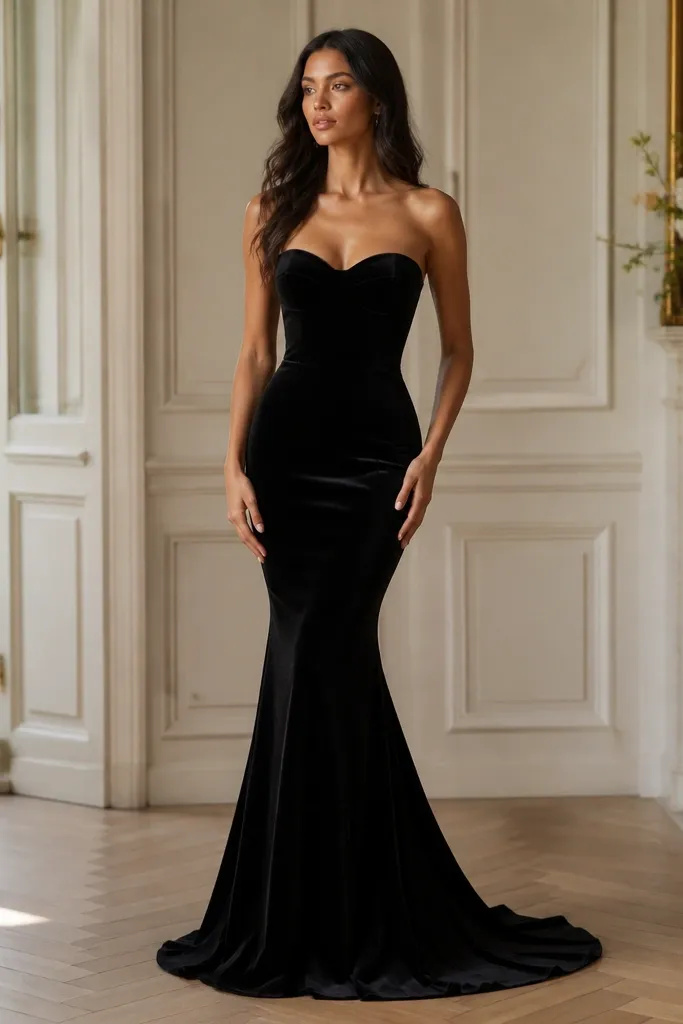
Mermaid cuts show off shape, but velvet can look cheap if it pulls at the seams. The right mermaid has lining that lets the velvet glide while the outer fabric stays smooth. When the flare starts at the right point, the gown looks tailored instead of costume-like.
Look for a flare that begins around mid-thigh to just below - too high makes it look like a skirt overlay. The hip area should feel snug but not strain the velvet pile; you should be able to sit without the seam biting. In fitting, check the back - mermaid seams often need a small sway adjustment.
Pro tipAdd a hem weight or use a slightly heavier lining so the flare falls cleanly. Light lining makes mermaid velvet cling and twist.
AvoidDon't buy mermaid velvet if the fabric feels "stiff" or boardy - it creases and shows seam stress.
9. Velvet Babydoll Bodice with Long Skirt Length
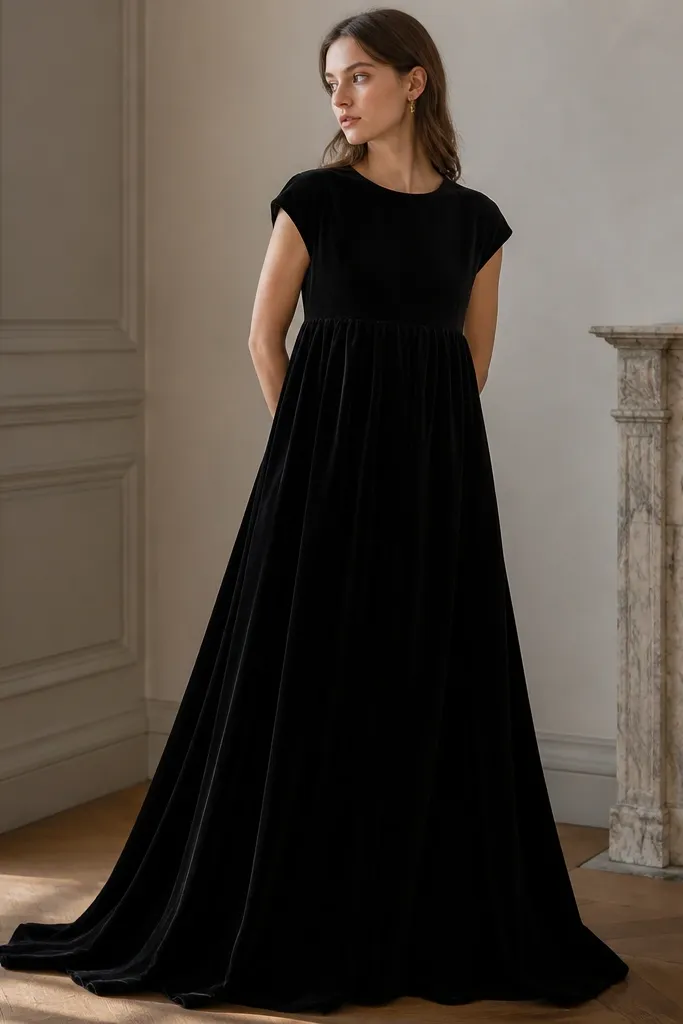
This shape is flattering when you want comfort but still want a formal look. The under-bust seam separates the velvet's drape so it doesn't cling awkwardly over the torso. The result is smoother lines in photos because the velvet isn't stretched across every curve.
Choose a seam placement just under the bust so the skirt starts at a flattering line. If you're busty, pick a bodice with darts or a soft molded cup lining. Keep the skirt length floor-skimming, not dragging, so the velvet pile stays intact.
Pro tipUse a narrow belt seam only if the gown already has structure. Loose belt accessories look messy with velvet.
AvoidSkip babydoll velvet gowns with thin, clingy lining - they swing around and wrinkle the velvet.
10. Velvet Cape-Back Evening Gown
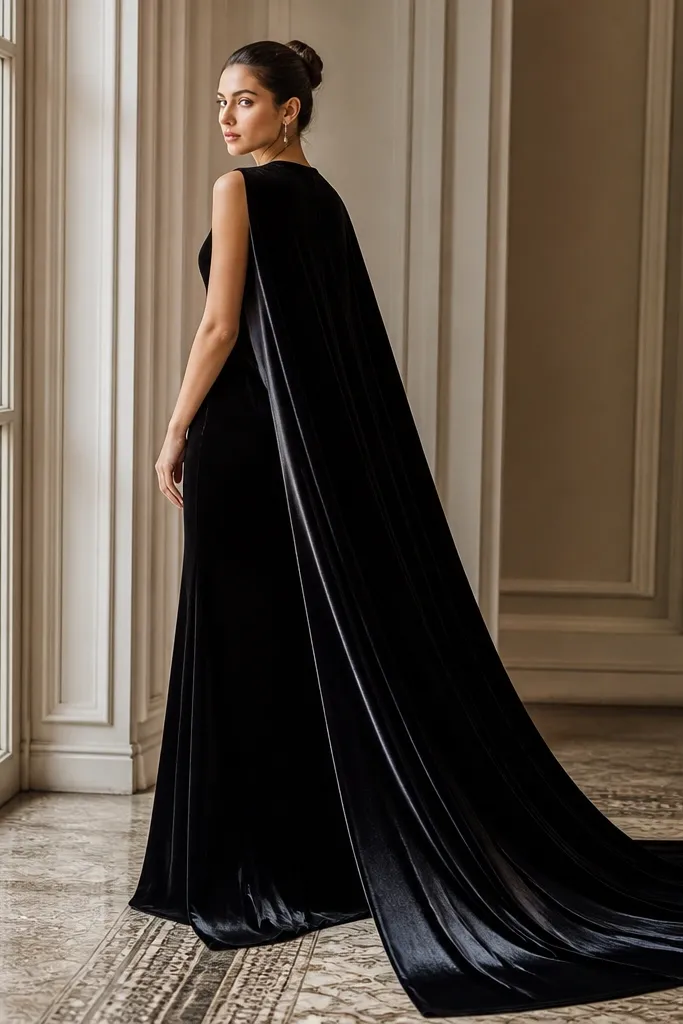
A cape back makes black velvet feel theatrical without adding bulk at the front. The extra fabric also hides small fit issues at the upper back because it moves with you. In warm lighting, the cape edges create a soft highlight that reads high-end.
Make sure the cape attaches securely at the shoulder seam or upper back so it doesn't slide. The front should still have enough structure to keep the neckline and bodice smooth. For styling, keep your hair simple - a low bun shows the cape line better than loose hair.
Pro tipTest the cape in a mirror with your arms raised. If the cape shifts sideways, it needs an internal anchor point.
AvoidAvoid capes made from the same velvet pile without any lining - they can stretch and look droopy.
11. Velvet Gown with Button-Front Detail and Column Skirt
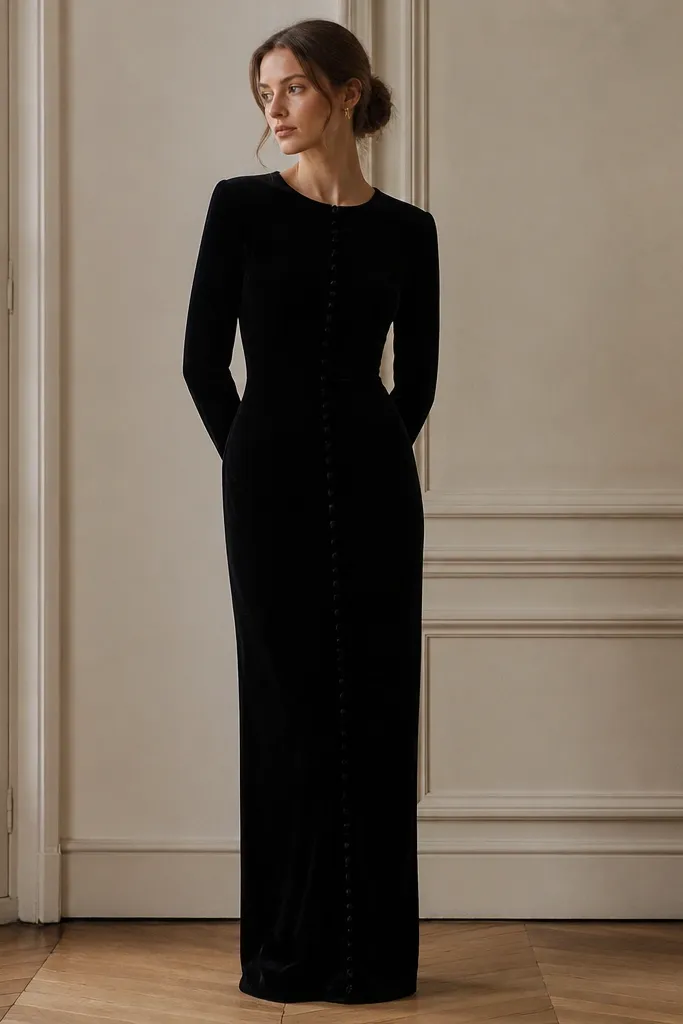
Button-front details add interest while keeping the overall silhouette clean. On black velvet, the button placement matters - too many buttons or wrong spacing makes it look like a robe. When the buttons are evenly spaced and the bodice is fitted, the gown looks tailored and intentional.
Look for buttons that are covered or very close in color to the velvet so they don't look shiny. Keep the column skirt from clinging by choosing a lining with a smooth surface. If you have a long torso, check that the button line doesn't end too high - it should keep your vertical line.
Pro tipPress the front seam with a steamer before wearing. Velvet button lines show uneven pressing immediately.
AvoidSkip button fronts with big gaps or misaligned buttonholes - it reads sloppy in photos.
12. Velvet One-Shoulder with Diagonal Draped Panel
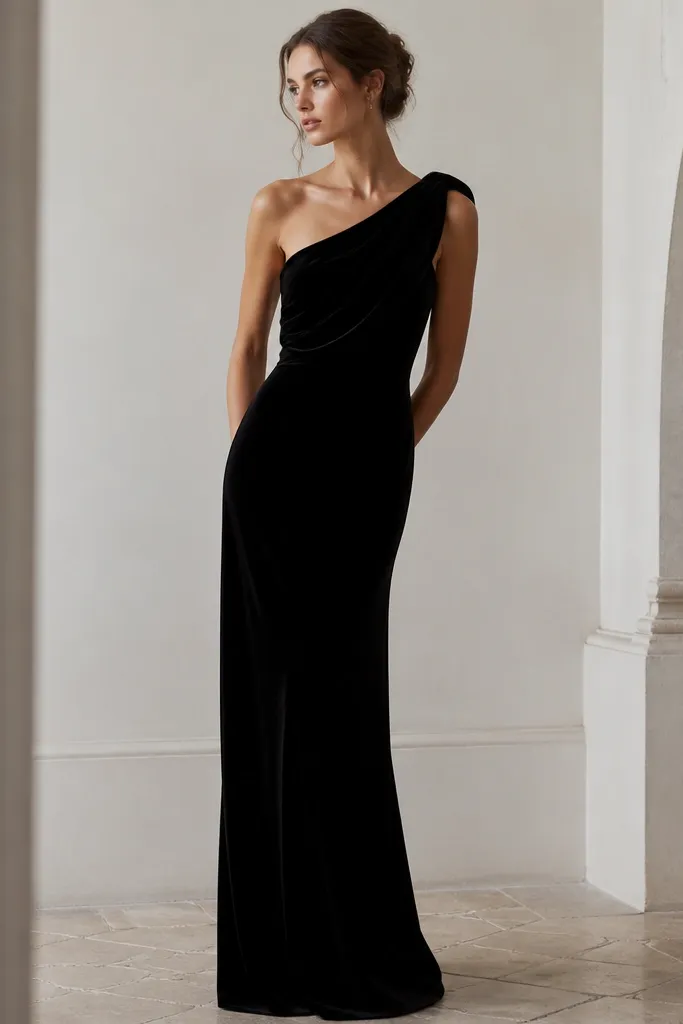
One-shoulder styles look sharp because the diagonal line adds shape where you want it. The draped panel on black velvet catches light along the fold, which makes the gown look dimensional instead of flat. It also draws attention away from areas you want to downplay, especially around the midsection.
Pick a diagonal drape that is sewn, not just loosely attached - loose drapes shift and wrinkle the velvet. The shoulder strap should be wide enough to hold shape without digging in. If you're tailoring, adjust at the waist first; then check the drape line so it stays even across the bodice.
Pro tipUse a small fashion tape at the inner edge of the draped panel so it doesn't slip during dinner.
AvoidAvoid one-shoulder gowns where the strap is narrow - the velvet pile catches and can look worn at the shoulder.