1. Evergreen satin column with a front slit and pearl-drop earrings
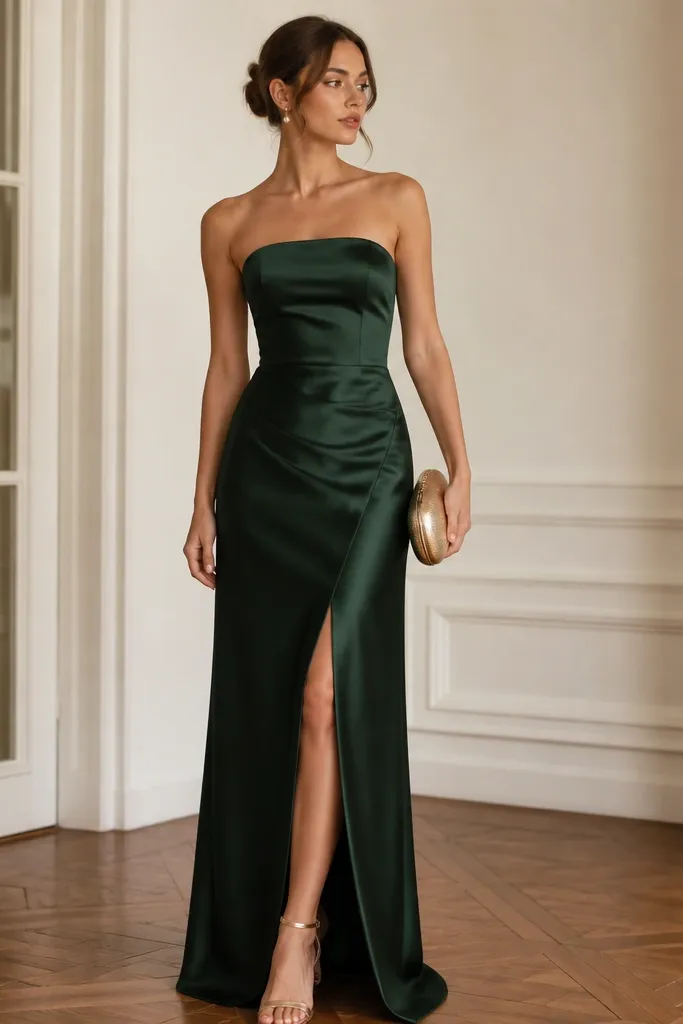
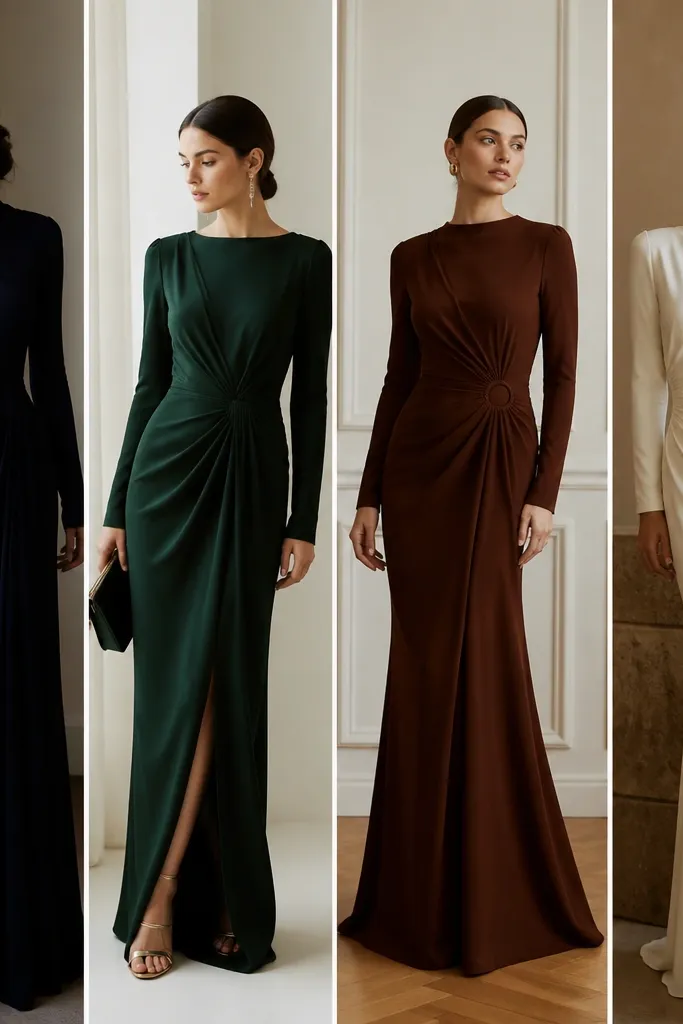
This is the "I wore it last month and it still looks new" dress. Deep evergreen satin gives a sleek reflection that flatters your legs without needing a bold pattern. A front slit at mid-thigh adds movement while keeping the rest of the gown clean. Pearl-drop earrings soften the shine so the whole outfit reads evening, not disco.
Look for a satin that isn't too slippery; satin-back crepe is my preference because it drapes and holds shape. The slit should start around the middle of your thigh, not higher, so you're not constantly adjusting. Keep the waist seam minimal or absent for that column effect.
Pro tipMatch your clutch hardware to the earrings - gold-toned pearls look best with warm gold metal.
AvoidAvoid satin that wrinkles and looks creased at the bodice - it photographs flat and cheap.
2. Emerald halter maxi with a low-back and strappy silver heels
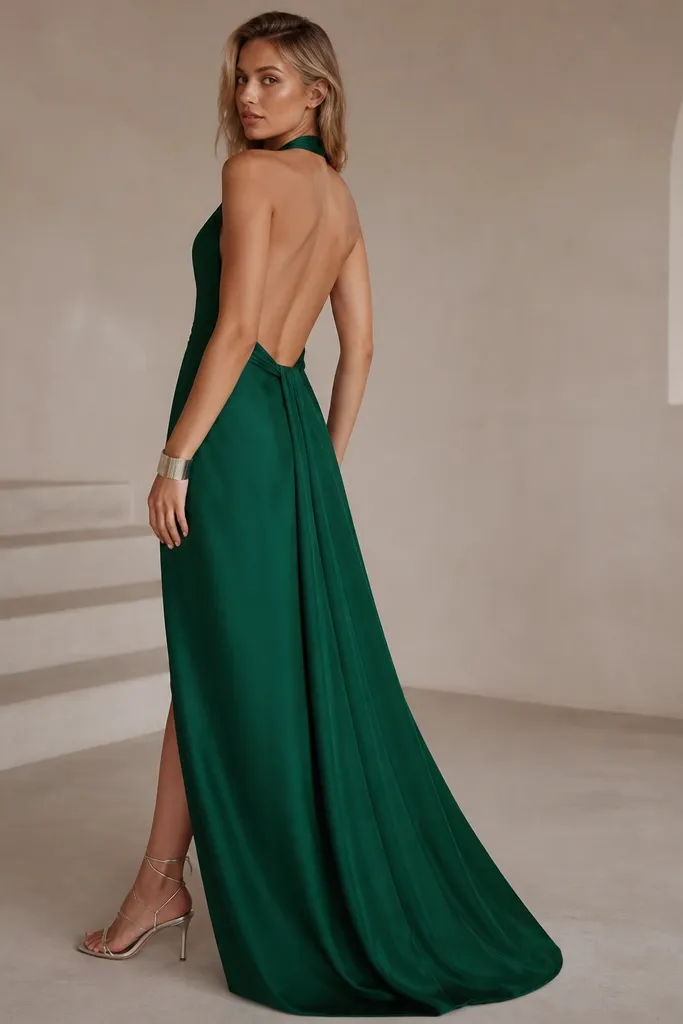
Halter necklines make green feel modern because they frame the shoulders and collarbone. Emerald reads brighter than evergreen, so it stays lively under evening lighting. The low back adds a second focal point when you turn, which makes the gown feel intentional even with simple accessories. Silver heels keep the color crisp and prevent the outfit from going too warm.
Choose a halter with boning or a structured lining so it sits flat at the neckline. The back cut should be low enough to show skin but not so low that the fabric pulls - aim for a smooth U-shape. Pair with thin straps so the hemline stays visually long.
Pro tipUse clear gel or double-sided fashion tape along the neckline edge if it gaps when you move.
AvoidSkip chunky platforms - they shorten the leg line and fight the halter's clean geometry.
3. Forest green lace overlay on nude lining with a gold belt
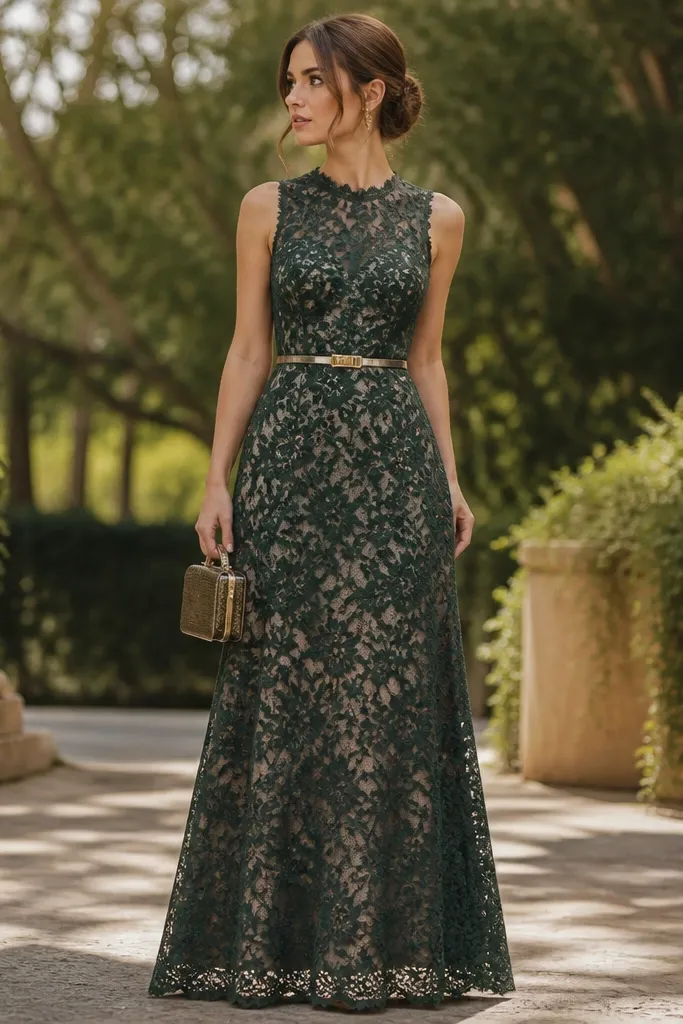
This one is for when you want green with texture, not just color. Lace overlay over nude lining makes the green look richer and more dimensional, especially in flash photos. A thin gold belt defines your waist and gives the gown a rewearable "signature" you can repeat with different shoes. Gold hardware also plays nicely with the warm undertone that lace often has.
If the lace is too dark over nude, the dress can look heavy; look for lace that has visible pattern contrast, like floral motifs. Keep the belt narrow - around 1 cm - so it doesn't break the vertical line. The hem should still skim the floor; lace edges can catch and lift if it's too short.
Pro tipHand-tack the lining to the lace at two points (under bust and near side seam) so it doesn't shift during the night.
AvoidDon't choose a lace overlay with a nude lining that's too pale or too pink - it can clash with green and look off in pictures.
4. Olive chiffon wrap maxi with a twisted waist tie
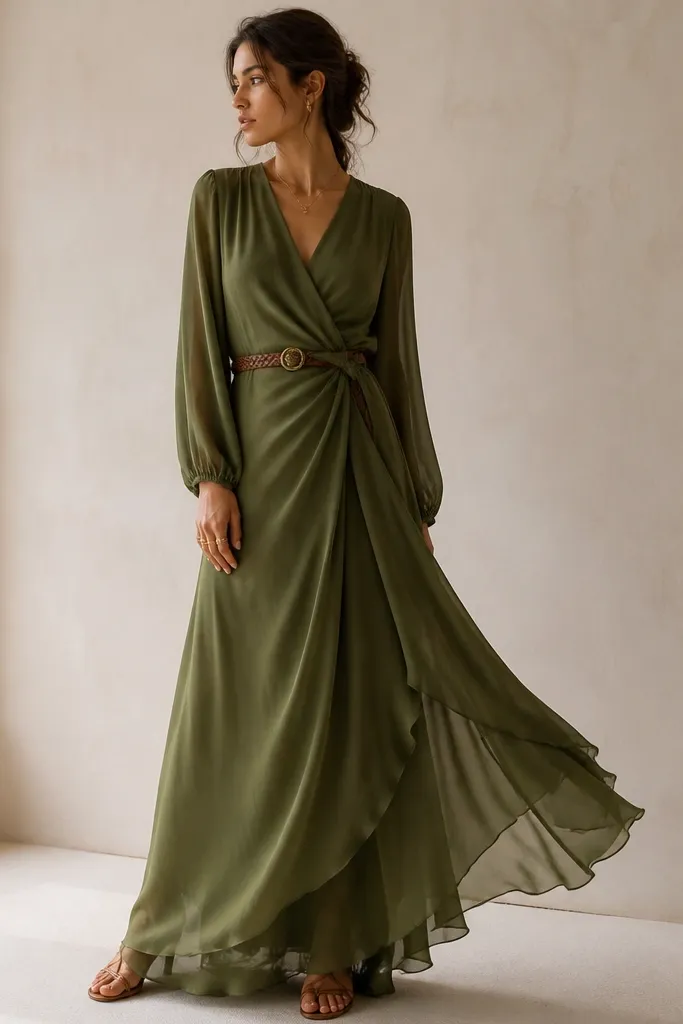
Chiffon wrap dresses move like fabric, not like a costume. Olive green has a natural softness, and the wrap neckline flatters because it creates a vertical center line. The twisted waist tie is a small detail that reads elevated in photos. Keep jewelry delicate so the chiffon stays the star.
Choose chiffon that has a slight weight to it; super-light chiffon clings and sticks. The wrap should overlap enough to prevent gaping when you sit. If there's a lining, make sure it ends at the same hem level so the skirt doesn't look patchy.
Pro tipTie your waist at home with a mirror and mark the knot with a small stitch so you can recreate it quickly.
AvoidAvoid wrap dresses with low-quality ties that slip - you'll spend the night fixing your waist.
5. Sage green crepe slip gown with a square neckline
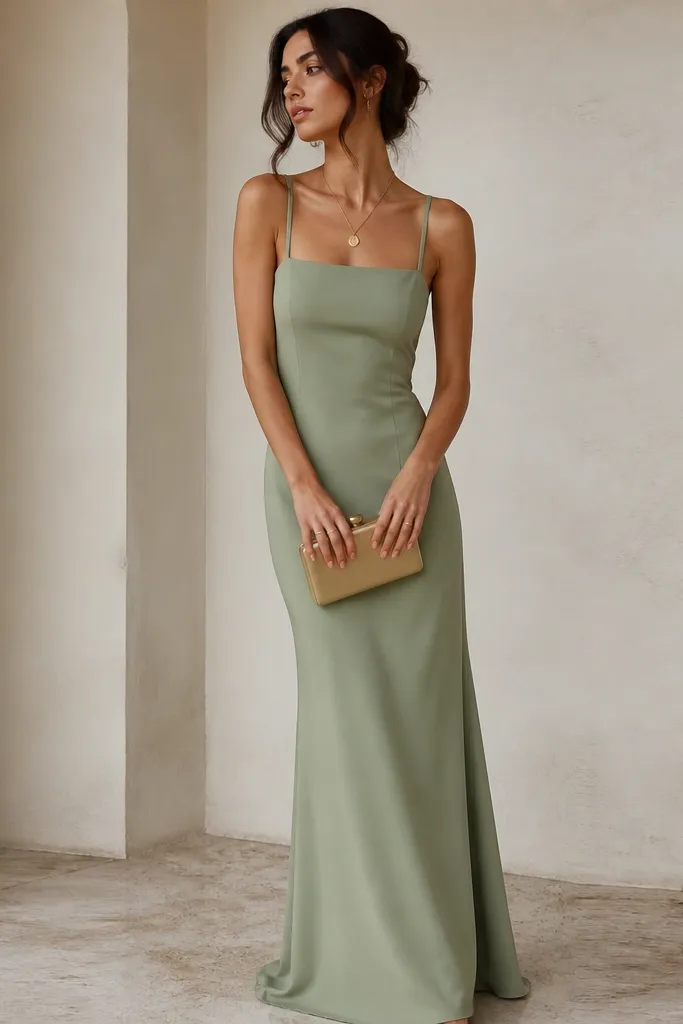
Sage green crepe looks expensive because crepe doesn't shine like satin. The square neckline gives a clean frame and makes the dress feel tailored even if it's simple. A slip silhouette works for rewearing because you can switch the mood with jewelry and shoes. Gold pendant jewelry sits nicely on the neckline without competing with the fabric.
Pick a crepe that has body - it should hold the straight straps and not collapse. The hem should fall straight with a slight skim; if it flares, the dress can look sloppy. For support, look for adjustable straps or built-in cups.
Pro tipWear a strapless shapewear short or slip brief so the crepe stays smooth through the hip.
AvoidSkip dresses with thin, see-through crepe - it turns into a lingerie look under flash.
6. Jewel green velvet gown with long sleeves and a velvet bow at the back
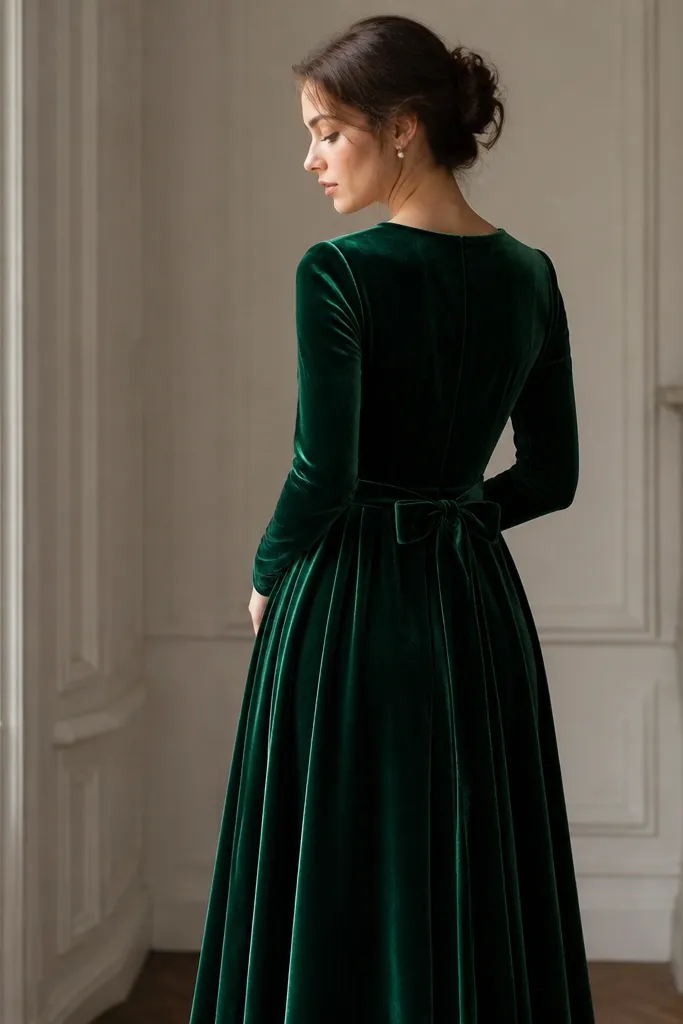
Velvet makes green look deep and rich without needing extra decoration. The pile catches light in a way that flatters your figure as you move. Long sleeves add elegance and make it feel "event" even for cooler seasons. A small bow at the back gives you a detail people notice when you turn.
Velvet should feel dense, not crushed. Look for a gown with a lining that prevents the fabric from clinging to your arms. The bow works best when it sits at the lower back and doesn't distort the seam lines.
Pro tipSteam velvet lightly with a handheld steamer on low heat and keep the steamer moving - don't press.
AvoidAvoid cheap velvet that sheds or looks shiny in random patches - it shows up hard in photos.
7. Emerald taffeta ball skirt with a fitted bodice and pearl studs
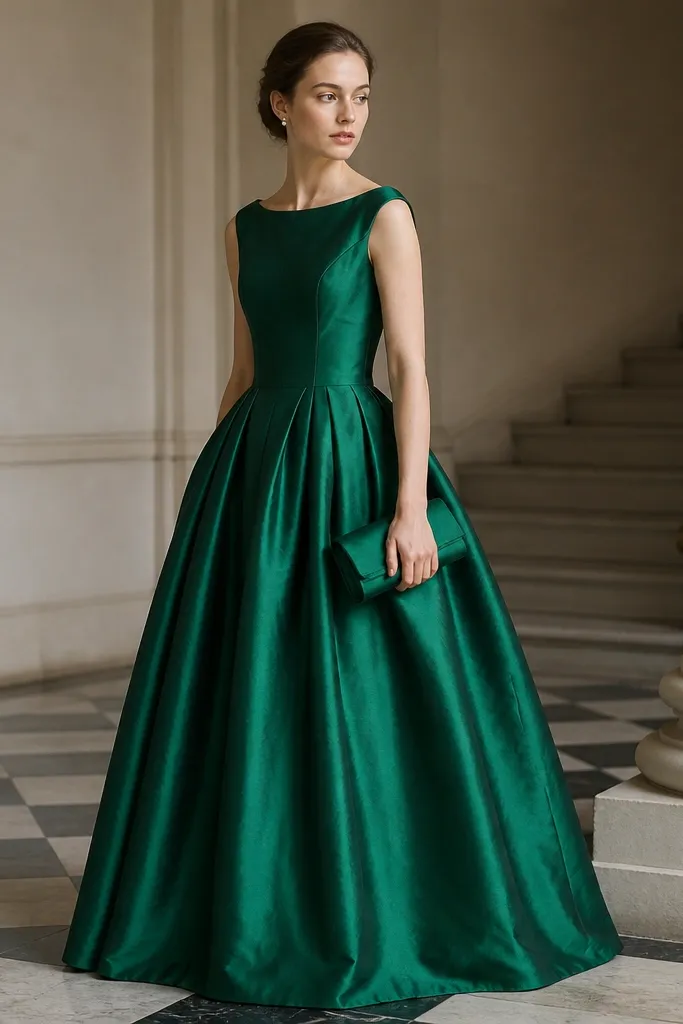
Taffeta gives you a structured silhouette that photographs like a dream. The fitted bodice keeps your upper body sleek while the skirt creates that classic evening volume. Emerald taffeta reads bright and clean, especially with matte pearls. Pearl studs keep the face area polished without fighting the skirt's shape.
The skirt should have a crisp fall; if it looks limp, it won't hold the ball shape you want. Try it with the shoes you'll wear so the waist-to-hem proportion stays right. Keep the bodice smooth - avoid overly gathered fabric at the bust if you want a flattering line.
Pro tipAdd a half-inch hem weight or check if the hem already has it; it stops the skirt from twisting.
AvoidSkip dresses with a thin lining that pulls when you sit - you'll feel the drag all night.
8. Deep green satin wrap maxi with a braided belt and chandelier earrings
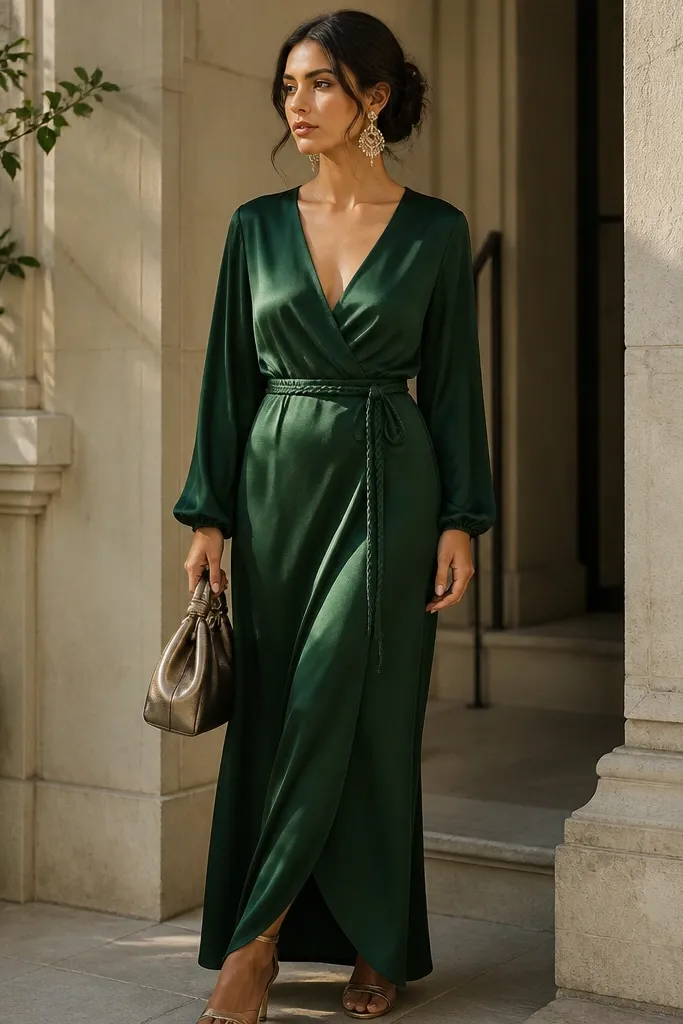
Wrap construction gives you control over fit, and satin makes the wrap look intentional instead of casual. The braided belt adds texture that keeps the green from looking like plain fabric. Chandelier earrings bring drama at the face so the dress feels like a night-out look. This combo is great when you want to rewear the same dress but change the energy.
The wrap should close without gaping when you raise your arms. Choose a braided belt that's narrow enough to define the waist but not so thick it creates a hump. Metallic bag in warm tones - champagne gold - pairs well with deep green satin.
Pro tipSew one small internal tack where the wrap overlaps so it stays put when you dance.
AvoidAvoid belts that sit too low - they shift the waist down and make the dress look heavier.
9. Teal-leaning green column with asymmetric neckline and black strappy heels
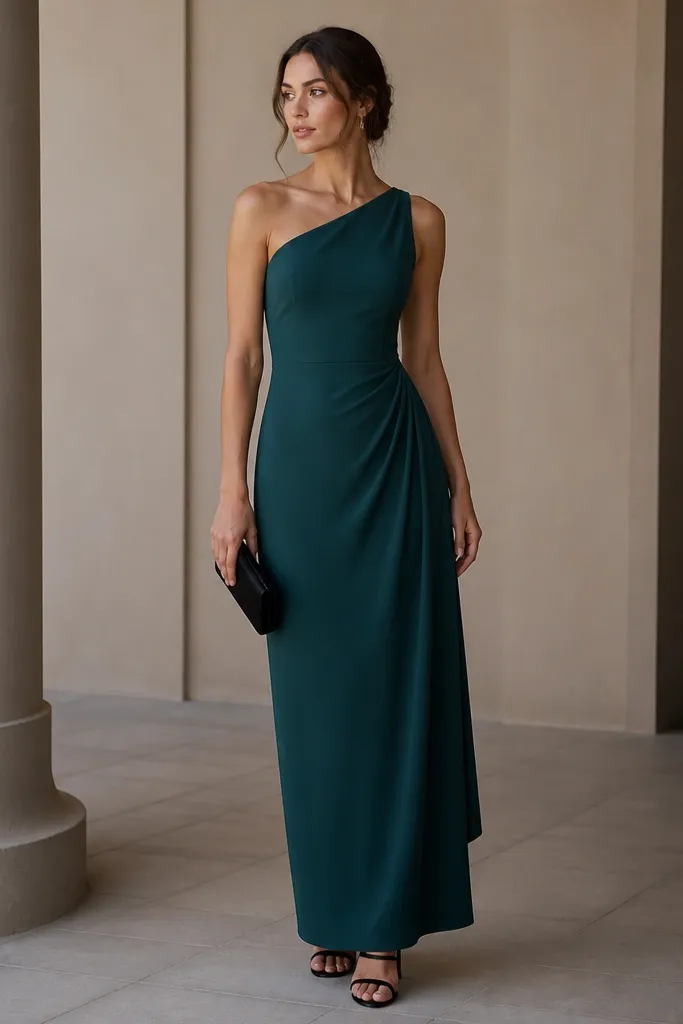
When green pulls slightly teal, it looks modern with high-contrast accessories. An asymmetric neckline is the "design moment," so you don't need extra embellishment. Black heels make the outfit feel intentional and sharp, especially in low light where green can otherwise blend into the background. This is the dress I reach for when I want something sleek but not boring.
Pick a column dress with side drape that lays flat, not bunchy. The asymmetric neckline should sit cleanly at the shoulder line; if it twists, it will look messy in photos. Keep the jewelry minimal - one ring or a thin bracelet is enough.
Pro tipMatch your nail polish to the dress tone: deep green or dark teal reads best with black shoes.
AvoidSkip nude heels - they can make the dress look washed out against teal-leaning green.
10. Smoked green satin with ruched bodice and a thin gold cuff
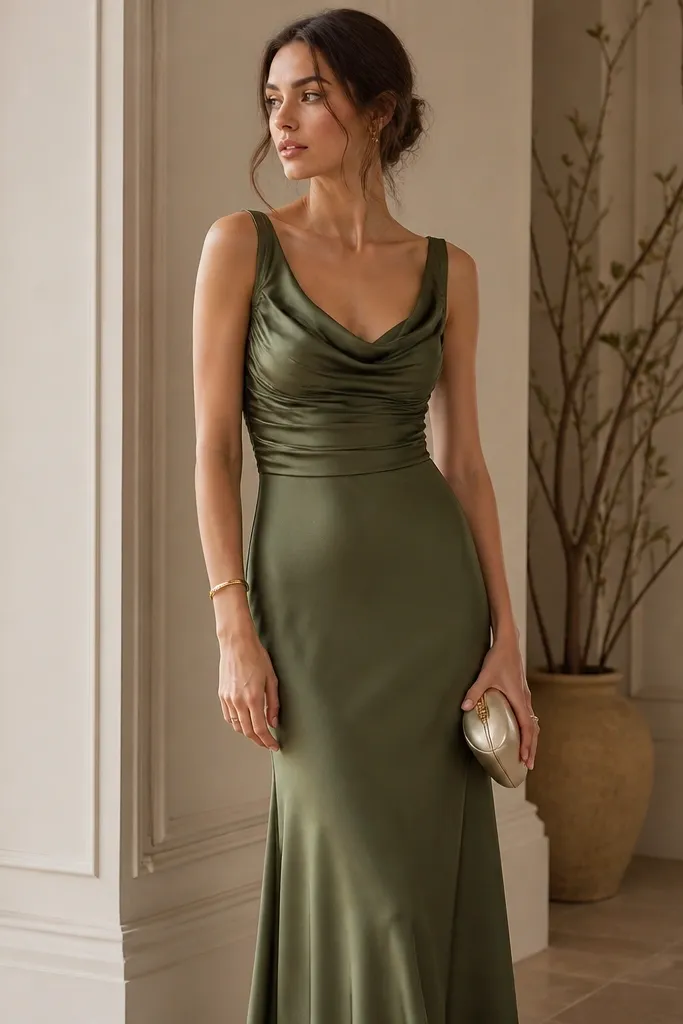
Ruched satin hides small fit changes fast. It smooths the bust and waist area because the fabric stretches and gathers instead of pulling tight. Smoked green looks almost moody, which means it holds attention even with simple accessories. A thin gold cuff gives you one crisp highlight on the arm without turning into costume jewelry.
Choose ruching that starts at the natural bust line and doesn't end too high; otherwise it can cut your torso in half. The skirt should be mostly straight to keep the ruching as the main texture. If the dress is very shiny, pick a matte cuff so the outfit doesn't sparkle everywhere.
Pro tipIf the ruching creases on you, press it with steam from a distance and hang it for 20 minutes before wearing.
AvoidAvoid ruched bodices with uneven gathers - they show as bumps in flash photography.
11. Olive green sequin mesh maxi with a matte slip underlayer
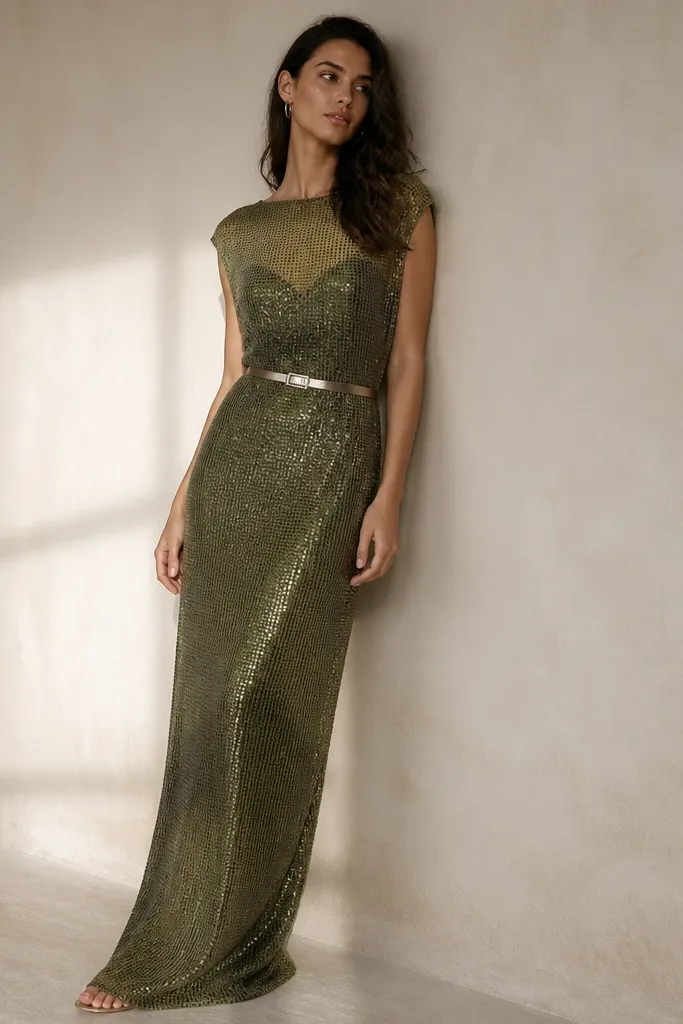
Sequin mesh over a matte slip is the trick when you want sparkle without scratchy chaos. The sequins catch light in small points, and the matte underlayer keeps the silhouette smooth. Olive green sequins look classy rather than party because the shade is muted. A slim silver belt gives you a clean waist definition without adding more texture.
Make sure the underlayer is opaque and the straps are adjustable so the sequin layer doesn't pull. The slit helps with movement, but keep it subtle - just enough to show your step. Silver belt works best if the sequins have a cool undertone; if they look warm, swap to gold.
Pro tipWear a smoothing slip or seamless shorts under the underlayer so the sequins don't snag on skin.
AvoidAvoid sequin mesh without an underlayer - you'll feel every scratch and it will cling in photos.
12. Forest green chiffon overlay maxi with a beaded neckline and low bun
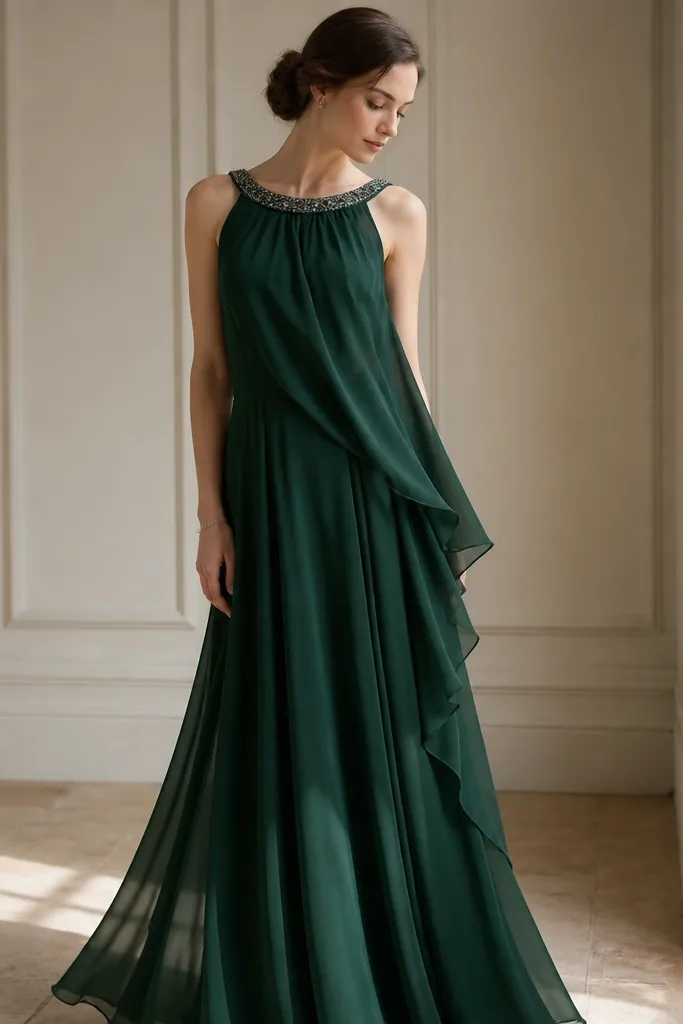
Chiffon overlay creates movement, and a beaded neckline concentrates attention at the face. Forest green with beads looks expensive because the beads reflect without turning the whole dress into glitter. I like this combo with a low bun because it keeps the neckline jewelry visible when you talk and eat. You can rewear this dress for weddings, dinners, and even holiday parties with different earrings.
If the chiffon is layered, check that the inner layer is longer so you don't see uneven hem peeking. The beaded neckline should sit flat at the collarbone; if it floats, it will snag hair. Keep the skirt fall gentle - too much volume can hide your shoes and shorten the look.
Pro tipUse a small anti-slip tape on the inside of the neckline so it stays centered all night.
AvoidSkip big statement earrings with heavy beading at the neckline - the face area turns cluttered.